
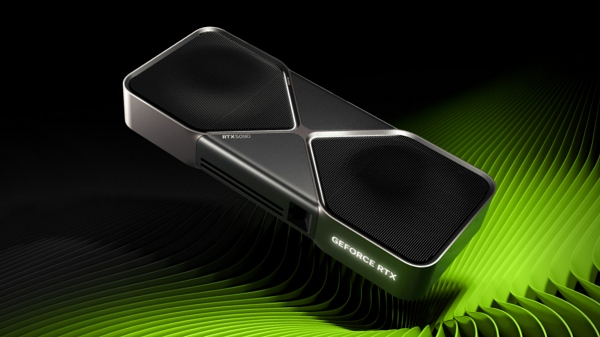
The price of Nvidia RTX graphics cards could rise again, raising the prospect that consumers may face higher retail prices. Reports that prices for GDDR6 and GDDR7 memory, a key graphics card component, are set to rise have prompted expectations that higher manufacturing costs could be passed on to consumers.
IT outlet TechRadar reported on July 24 that Nvidia is pushing to raise prices for GDDR6 and GDDR7 memory kits installed in RTX graphics processing units (GPUs).
The backdrop is a prolonged memory supply crunch. The PC industry has recently faced rising memory prices and persistent supply shortages, increasing the burden of manufacturing costs and spreading that impact to finished product prices.
Nvidia is reported to have communicated the matter to its AIB (Add-in Board) partners, including Asus, MSI and Gigabyte. AIB firms design and produce their own graphics cards based on Nvidia GPUs.
A consumer price increase has not been confirmed. Still, analysts say if memory kit prices rise, graphics card makers' production costs would increase first, making a rise in final retail prices more likely.
The PC hardware market has also seen a series of cases in which higher raw material prices lead to increases in finished product prices.
A similar trend is emerging in other PC product categories. Handheld gaming PCs and high-performance gaming devices are also seeing launch prices rise as they are affected by higher memory and storage prices. Some products are already being sold for more than $1,000.
The industry is also suggesting that AMD could raise prices for memory kits it supplies to its AIB partners. If prices rise, the broader graphics card market is expected to become more exposed to higher memory costs.
Nvidia recently resumed supplying the RTX 3060 to the market to broaden consumer choices. But if memory price increases materialise, it may be difficult to rule out the RTX 3060 also being sold at a higher price than before.
As concerns about price rises grow, cases of reusing existing graphics cards are drawing attention again. TechRadar reported that a Reddit user introduced an unusual dual-GPU setup using an RTX 3090 and an RTX 3050 together. In that system, the RTX 3050 handles frame generation for Lossless Scaling, while the RTX 3090 processes the actual game graphics calculations.
The user said performance improved from an average of 71 fps before applying the frame generation feature to as high as 144 fps after applying it, based on 4K resolution. Such a configuration has many constraints for typical gaming use. Most recent games are developed for a single GPU, and dual-GPU systems often require a larger power supply unit and a motherboard that supports additional PCIe lanes.
Even so, the industry expects that if graphics card prices keep rising, more attempts will be made to use existing GPUs as auxiliary compute devices or to repurpose them for other uses. With the memory supply crunch expected to be difficult to resolve in the short term, moves to raise the value of existing hardware are also expected to continue for the time being alongside higher graphics card prices.
 Jinju Hong
hongjj@d-today.co.kr
Jinju Hong
hongjj@d-today.co.kr