
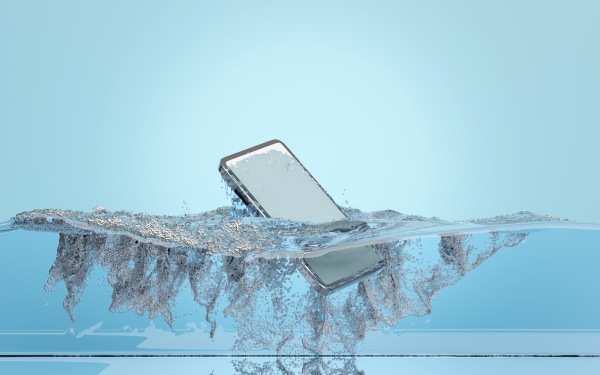
Even smartphones with an IP68 rating are difficult to regard as fully waterproof devices that can be used freely underwater, a critique has emerged. Relying only on a high water-resistance rating and using a phone for long periods at a pool or beach can lead to water damage, and most manufacturers do not guarantee such damage.
According to IT outlet Engadget on July 24, recently released smartphones mostly highlight IP ratings that indicate dust and water resistance. As a result, a perception has spread among consumers that an IP68 rating means a phone can be used without problems at pools or beaches, but the actual meaning is somewhat different.
Engadget said it is hard to recommend using a smartphone while playing in the water this summer. Even if a product has a certain level of water resistance, it is difficult to see it as designed to account for being submerged for long periods in various environments.
The key lies in the test standards for IP ratings. IP68 means blocking dust ingress and withstanding water immersion under certain conditions, but tests are conducted in a limited environment, such as specific depth and time set by the manufacturer. Even with the same IP68 rating, test conditions differ by manufacturer, which can create gaps with real-world use.
Because certification is based on fresh water, it is difficult to expect the same level of protection in water containing salt or chlorine, such as seawater or swimming pools. High water pressure, strong currents and repeated immersion are also often not included in the certification test scope.
Warranty policies are also far from consumer expectations. Many smartphone makers exclude liquid damage from warranty coverage. OnePlus, also mentioned in the article, emphasizes water resistance but states that warranty coverage is not available if damage occurs due to liquid.
For this reason, the more broadly people interpret usage based only on the number IP68, the more they may be exposed to unexpected risks. It may help at the level of everyday splash resistance, but it is hard to conclude it is safe for swimming, long submersion or filming during water activities. If a device breaks due to water ingress, consumers may also end up paying substantial repair costs themselves.
Experts advise consumers to check certification conditions and manufacturers’ warranty coverage together, rather than marketing phrases, when assessing a smartphone’s water resistance. A high IP rating only indicates a certain level of protection, and does not mean full waterproofing that can be used freely in any environment.
In the end, to use a smartphone for a long time, it is important to first check under what conditions it was certified and how far the manufacturer actually guarantees, rather than focusing on the number IP68, Engadget stressed.
 Jinju Hong
hongjj@d-today.co.kr
Jinju Hong
hongjj@d-today.co.kr