
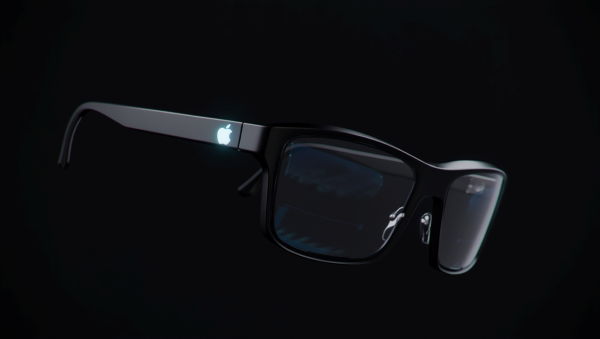
Apple is reportedly preparing artificial intelligence (AI) smart glasses and new Apple Watch models at the same time.
Bloomberg's Mark Gurman (마크 거먼) reported on July 26 that Apple is pushing toward unveiling AI smart glasses at next year's Worldwide Developers Conference (WWDC27). A late-2027 launch is seen as likely.
If the timeline materialises, Apple would choose an approach of unveiling hardware first, then preparing a developer ecosystem, before moving to a formal launch. Analysts say that if Apple introduces a new device at WWDC, it is likely to also release the groundwork for developers to build software for it. As a result, the smart glasses could be designed to go beyond Apple-only functions and link to data and actions in external applications, like a new Siri AI. In that case, the launch pattern could resemble the Apple Vision Pro in 2023. At the time, Apple announced hardware and software months in advance to give developers time to prepare apps, then released the actual product later.
A privacy issue lies behind the delay from earlier expectations. Apple's smart glasses were initially discussed as a possible late-2026 launch, but concerns about camera-equipped, glasses-type devices appear to have affected the schedule. As Apple has promoted privacy as a core product message for more than 10 years, some also point to the risk of damaging that image by entering the market for camera-equipped smart glasses like Meta, which has already faced privacy-intrusion controversy.
Apple is testing devices that do not include a camera at all, while also reviewing software-based countermeasures. It is expected to rely on on-device processing, excluding facial recognition or always-on recording features like Meta's "super sensing". Some also expect Apple will not use customers' recording data to train AI models. Apple is also reported to be testing, at the prototype stage, multiple hardware and software privacy features that are not in current products. Options being discussed include completely excluding a camera, or using a camera that cannot take photos and only has sensing functions.
Product specifications have been reported in relatively limited terms. The smart glasses will not include a display, but are expected to support features such as taking photos, listening to music, talking to Siri and making phone calls. Apple is also reviewing a design that is both distinctive and fashion-oriented to differentiate from rival products.
Work to revamp the Apple Watch is also under way. Gurman reported that Apple is in the final testing stage for the Apple Watch Series 12, for both Wi-Fi and cellular models, and the Ultra 4. The Apple Watch SE is expected not to be refreshed this year, as the third-generation model was released last year.
The new Apple Watch models are not expected to see major design changes. Instead, they are likely to focus on boosting performance and speed with a new chip and improving health and fitness tracking features. Specific performance improvements have not yet been confirmed, but it is worth noting that the last major processor change for the Apple Watch was when it adopted the S9 chip in 2023. More visible design changes are seen as likely only in 1 to 2 years, and Apple is also reported to be continuing development of blood glucose sensing. However, it is assessed that there is still a long way to go before technology allowing wearables to measure blood glucose non-invasively is commercialised.
Two points stand out. One is how Apple will settle the camera and privacy issues in its smart glasses. The other is whether the device can expand beyond a simple wearable into a new AI platform with a developer ecosystem. If an actual unveiling takes place at next year's WWDC and new Apple Watch models are also launched, Apple's hardware strategy is expected to take clearer shape.
 Seung-a Yoo
ysah@d-today.co.kr
Seung-a Yoo
ysah@d-today.co.kr