
Ford will team up with China’s Geely to jointly produce electric vehicles and plug-in hybrids in Europe, EV outlet Electrek reported on July 23.
The two companies plan to set up a new joint venture at a Valencia, Spain, plant to produce new energy vehicles for the European market. The tie-up is linked to a reshaping of Ford’s Europe strategy. The companies are reviewing a system capable of producing about 500,000 vehicles a year by using idle capacity at the Valencia plant. Regulatory approvals remain, but under the proposed structure Ford would own 66 percent of the joint venture and Geely 34 percent.
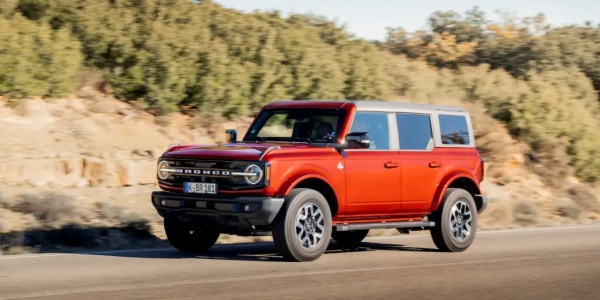
The production lineup is also taking shape. Ford plans to build a new multi-energy electric crossover under the Ford brand in Valencia. Geely will produce two electric SUV models at the plant. Separately, Ford also plans to build a new small SUV for the Bronco family at the same plant. Ford introduced the model as a “tough, compact and adventure-oriented” Bronco.
The two companies will begin production preparations in the first half of 2027, and the first vehicles are expected to come off the line in 2028. Until then, the Valencia plant will continue producing the Kuga, a top-selling plug-in hybrid in Europe.
Ford plans to offer the new Bronco with a range of multi-energy powertrains, including a plug-in hybrid. The electric crossover is also scheduled for launch in 2028, and versions as an EV and a plug-in hybrid are expected based on Geely’s GEA platform.
Geely’s push to expand local production will also move ahead. One of Geely’s new electric SUVs has been raised as likely to be the E2, a rebadged model of the EX2, which was China’s best-selling EV in 2025. Once local production in Europe begins, Geely will secure a production base to expand sales.
Ford said it is pursuing the cooperation for cost competitiveness. The two companies plan to concentrate production volumes at the Valencia plant to lower per-vehicle production costs and respond to low-priced EV offensives by Chinese companies such as BYD and MG. Jim Farley (짐 범빅), head of Ford Europe, said the company chose a partner willing to invest together in European production and that it is important to make vehicles in Europe, compete for Europe and operate under the same rules.
The company also signalled it will not wait for policy changes. Farley said there is no time to wait until talks on policy overhaul are concluded and that it is building a competitive industrial system now that strengthens, rather than bypasses, European manufacturing.
The joint venture also leaves open the possibility of technology cooperation beyond a simple production partnership. Ford said the new vehicles will provide an “exceptional digital experience”, and the two companies have previously discussed sharing new technologies such as autonomous driving and advanced driver assistance systems.
As a result, the Valencia plant is expected to become a base where Ford’s European electrification strategy meets Geely’s localisation strategy. Ford will use idle capacity to lower its cost structure, while Geely secures a production foothold in Europe, allowing both to address their needs at the same time.
 Jinju Hong
hongjj@d-today.co.kr
Jinju Hong
hongjj@d-today.co.kr