
[DigitalToday reporter Son Seul-gi] The Science, ICT, Broadcasting and Communications Committee of the 22nd National Assembly begins full-scale work in the second half after the ruling and opposition parties completed their lineups. The committee is expected to take up as key tasks budgets and power procurement to connect the government's large-scale AI policies to projects, and overhauls of broadcasting and telecommunications regulation.
According to the National Assembly on July 23, the People Power Party completed committee assignments that day. From the party, Rep. Choi Hyeong-du takes the role of floor spokesperson, with Reps. Kim Jang-gyeom, Park Jeong-ha, Seo Cheon-ho, Lee Jin-sook and Cho Kyung-tae joining as members.
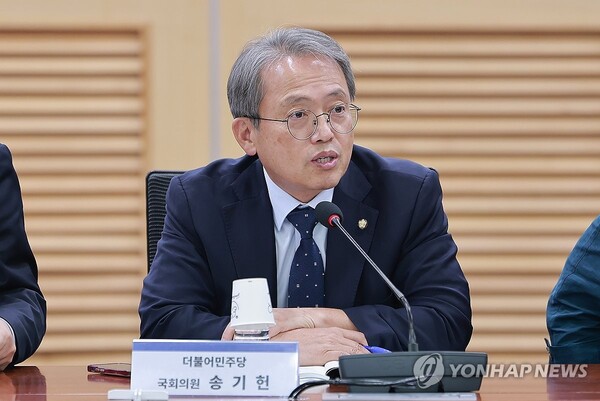
Earlier, the Democratic Party elected Chairman Song Gi-heon (송기헌) on June 30 and began committee work with floor spokesperson Han Jun-ho (한준호) and Reps. Kim Nam-guk, Kim Woo-young, Kim Hyun, Lee Yeon-hee, Lee Jeong-heon, Lee Ju-hee, Lee Hoon-gi, Jung Dong-young and Hwang Jeong-a.
AI projects have grown, but budget priorities are key
The first task for the second-half committee is securing funding for a series of AI projects the government has announced and setting investment priorities.
The government is simultaneously pursuing projects that require large fiscal spending, including AI data centres, physical AI, an independent AI foundation model, and industry-specific specialised AI models.
With fiscal authorities calling for more efficient spending, it will not be easy to secure all budgets needed for each project. The committee must assess each project's necessity and whether projects overlap, and also distinguish the roles of private investment and government finances.
Floor spokesperson Han emphasised the need to secure additional funding in science and technology after a party-government policy meeting of the committee the previous day. "Fiscal authorities are trying to cut, and in science and technology there are parts where the need to spend large sums keeps coming up," he said.
A key issue in second-half budget reviews is where to deploy limited funds first among semiconductors and computing infrastructure, AI model development and on-site industry demonstrations.
To expand AIDCs, power must be secured first
Power supply needed to expand the AI industry is also a major issue.
Operating large-scale AIDCs and semiconductor production facilities requires stable supplies of enormous amounts of power. Even if the government speeds up efforts to expand AI computing infrastructure, projects could be delayed if the power grid and generation sources do not support them.
Inside and outside the committee, alternatives being cited include research and development of small modular reactors, expanding power purchase agreements, and securing new generation sources.
Rep. Hwang said, "AI issues are necessarily power issues," and added, "Now is the right time to do SMRs."
Chairman Song also called for follow-up discussions on ways to procure power for AIDCs. At a recent AI infrastructure strategy forum at the National Assembly, he cited the exclusion of PPA-related provisions during review of a special AIDC law and said, "We need to gather opinions at the committee or government level and clearly organise exactly what must be done to move to the next stage."
AIDCs have also been a topic of steady interest for People Power Party lawmakers who served on the committee in the first half, including floor spokesperson Choi. Rep. Kim Jang-gyeom, for example, introduced in February a bill to promote AIDCs and an amendment to the Distributed Energy Act to allow direct power transactions.
However, building power plants and expanding the power grid also intersect with the jurisdictions of other standing committees, including the Trade, Industry, Energy, SMEs and Startups Committee. Even if the committee raises the need for AI and nuclear technology development, cooperation among relevant ministries and standing committees is needed to translate it into actual power supply.
Regulation of false and manipulated information draws attention to possible re-amendment
In broadcasting and telecommunications, an amended Information and Communications Network Act containing regulation of false and manipulated information is expected to emerge as a key issue.
The amended law requires large platforms to establish their own operating policies that include criteria for judging false and manipulated information and procedures for reporting and taking action. They must also regularly disclose transparency reports that include numbers of reports and processing cases, as well as orders and recommendations from state agencies.
In the second half, the committee is expected to discuss whether it is appropriate for platforms to judge false and manipulated information first, and whether standards are specific enough to assess political and social issues.
The People Power Party may focus on arguing that vague definitions and judgment procedures for false and manipulated information could lead to excessive deletions by platforms or infringements of freedom of expression.
In particular, with Rep. Lee Jin-sook joining the committee after serving as chair of the Korea Communications Commission, which preceded the Broadcasting Media Communications Commission, partisan clashes over public broadcasters, freedom of expression and media regulation are expected to intensify. During her term as KCC chair, she had emphasised political neutrality and freedom of expression in broadcasting regulation.
The Democratic Party's position is that on-the-ground application should first be checked after the law takes effect. "We should first operate enacted bills and then judge," Han said. "It is an issue to talk about after supplementing personnel and budget and operating it in line with the purpose of the amendment."
Inside and outside the National Assembly, there is talk that rather than re-amending the law immediately, lawmakers may review whether to pursue supplementary legislation after checking actual cases of reports and deletions and how platforms operate.
Follow-up work on AI basic law, integrated media law also pending
Follow-up work on the AI basic law, which took effect in January, is also a major issue for the second-half committee.
The AI basic law imposes obligations to ensure safety and transparency on high-impact AI and generative AI operators. It also sets out measures to ensure AI safety and the designation of domestic representatives.
The second-half committee is expected to seek a balance between corporate burdens and user protection, and to check support measures for small and medium-sized enterprises and the effectiveness of law enforcement.
In broadcasting and media, topics for discussion include establishing a Media Development Commission as an integrated control tower for media policy and a comprehensive media legal framework, the Audiovisual Media Services Act, that includes online video services.
The committee must also address the depletion of funding sources for the Broadcasting and Communications Development Fund. The media market has been reshaped around OTT services and global platforms, but the fund's burden and support system remain centred on existing broadcasters and telecom operators.
In the second half, the committee is expected to continue discussions on ways to increase the fund's financial resources and adjust the entities subject to levies.
 Son Seul-gi
sageson@d-today.co.kr
Son Seul-gi
sageson@d-today.co.kr