
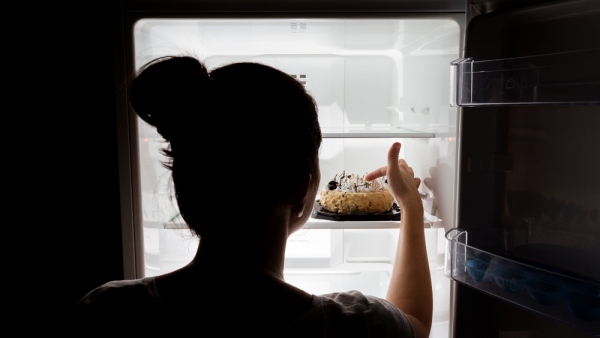
Research has found that spending long hours awake at night, known as a "night-owl lifestyle pattern", is associated with body fat percentage and metabolic indicators.
Medical News Today (MNT) reported on July 20 local time that a study published in Frontiers found that night-owl participants consumed more late-night snacks and had higher indicators suggesting obesity risk.
The study examined 287 New Zealand women of European and Pacific ethnicity. Participants were aged 18 to 45, and their body mass index (BMI) was in the normal range or in the obese category. Researchers analysed participants' blood samples, sleep and work information, 5 days of dietary records, body composition data, and activity and sleep data.
Researchers divided participants into morning, intermediate and evening types. More than half were intermediate, and the analysis grouped morning and intermediate types together and compared them with evening types. The evening-type group had a higher share of Pacific participants and had higher BMI, waist circumference, hip circumference, visceral fat ratio and upper-body fat ratio.
Differences in eating patterns were also found. The evening-type group had slightly higher daily carbohydrate intake and total energy intake, and carbohydrate, fat and protein intake was concentrated in the late-evening and early-night hours. The morning-and-intermediate group, by contrast, had higher related figures in the late-night and early-morning period. After adjusted analysis, the evening-type group's fat and protein intake in the late-evening and early-night hours remained higher.
In blood indicators, evening-type participants showed higher levels for some measures of blood sugar and triglycerides. The later the sleep time, the greater the tendency for indicators such as insulin and triglycerides to worsen. Higher evening energy intake was also linked to higher glycated haemoglobin levels, an indicator associated with prediabetes or type 2 diabetes risk.
Researchers said differences in time-of-day intake patterns were more distinct in the evening-type group among participants with higher body fat percentage. They summarised that an evening-type lifestyle in the high-body-fat group was associated with reduced energy, carbohydrate and protein intake in late night and early morning, while linking to higher intake of energy, carbohydrates and fat in late evening and early night.
Sura Alkaissi (수라 알카이시), an endocrinologist in internal medicine at UTMB who did not take part in the study, pointed to the importance of meal timing itself. She said meal timing can play an important role not only in total calories but also in body fat distribution and metabolic health, adding that higher triglycerides, insulin, glycated haemoglobin and leptin, and lower good cholesterol in evening-type participants reinforced the link.
Alex Dimitriu (알렉스 디미트리우), founder of Menlo Park Psychiatry & Sleep Medicine, also said the findings confirm a trend previously raised. He said people who sleep late eat more unhealthy food after sunset, have a shorter overnight fasting time, and have higher BMI and body fat percentage than those who go to sleep earlier.
The study is an observational study that covered only women from specific ethnic groups, making it difficult to generalise to everyone. Many evening-type participants were Pacific and had a higher poverty index, which could mean lower access to healthy food. Another limitation cited was that a significant portion of dietary records was self-reported.
A suggestion was made that clinical practice should consider meal timing as well as diet content. Mir Ali (미르 알리), medical director of the MemorialCare Surgical Weight Loss Center, said adjusting meal times may help reduce body fat for some people, adding that an approach that cuts carbohydrate and sugar intake at night and increases protein and low-starch vegetables could be effective.
Researchers said longer-term follow-up studies are needed. The current results do not allow a definitive conclusion that a night-owl lifestyle directly causes weight gain or metabolic abnormalities, but they confirmed it shows the need to consider sleep type and meal timing together in nutritional assessments for people with obesity, prediabetes or type 2 diabetes.
 Yoonseo Lee
yslee@d-today.co.kr
Yoonseo Lee
yslee@d-today.co.kr