
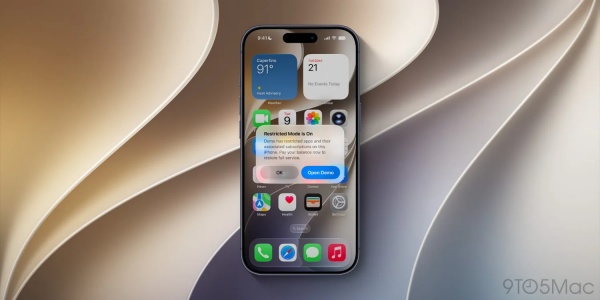
Apple is reportedly preparing a feature in iOS 27 that restricts the use of iPhones with overdue instalment or lease payments. If introduced, finance firms would be able to remotely restrict devices in arrears and block resets or resale.
IT outlet 9to5Mac reported on Monday that iOS 27 beta code includes a feature that switches overdue iPhones to a 'Restricted Mode' and a system that allows finance firms to control device use.
The feature is drawing attention as it aligns with speculation that Apple is preparing a new U.S. hardware leasing programme called Apple Upgrade.
Bloomberg previously reported that Apple is preparing a programme with buy now, pay later firm Klarna to offer iPhones, Macs, iPads and Apple Watches in a monthly subscription format. The iPhone and Apple Watch are said to be considering 24-month contracts, while the Mac and iPad are said to be considering 36-month contracts.
A key element found in the iOS 27 beta is a structure that allows finance firms to manage device status. The code includes an 'App Management' system designed so that an approved financial institution or service provider app registers a device and continuously checks contract status. When a contract enters arrears, an Apple system service switches the iPhone to Restricted Mode and blocks most apps until the issue is resolved.
Not all functions are blocked. The current code is designed so that Phone, Settings, the App Store, Wallet, Clock, Health, Passwords, Magnifier and accessibility functions remain available. Services that require emergency alerts, such as Messages, the Home app and some safety and medication-related apps, could also be allowed as exceptions. Which functions remain available can reportedly be adjusted in part by finance firms.
A potentially controversial point for users is subscriptions. The code indicates that existing App Store subscriptions are not automatically cancelled or suspended even if Restricted Mode is activated. That means subscription fees could continue to be charged even when apps cannot be used.
The arrears threshold is also not set uniformly. According to the code, it is not a system that locks automatically after several missed payments. Finance firms decide when to switch to Restricted Mode under their own policies.
Apple also appears to be expanding the feature to prevent workarounds. A new framework includes an activation lock feature called 'Partner Finance Lock'. It is analysed as being designed to prevent users from bypassing finance restrictions by resetting a device, selling it used or dismantling it for parts.
The feature links with the Find My system, but it is not reported to be a structure under which finance firms can view a user's location information. Instead, it aims to keep the finance lock status in place even after a device is reset or restored.
The timing of an official rollout has not been confirmed. The industry expects Apple Upgrade could be unveiled soon, but the related feature was not found in the latest iOS 26.6 RC version. That has raised the possibility that Apple could add the feature to a future iOS 26.6 official release, or introduce a new leasing programme together with iOS 27.
The industry sees the feature as going beyond a simple security function and potentially becoming a foundation for Apple to expand its business structure from hardware sales into a finance-based subscription and leasing model. Attention is focused on whether the ability to control delinquent devices through software will be introduced.
 Jinju Hong
hongjj@d-today.co.kr
Jinju Hong
hongjj@d-today.co.kr