
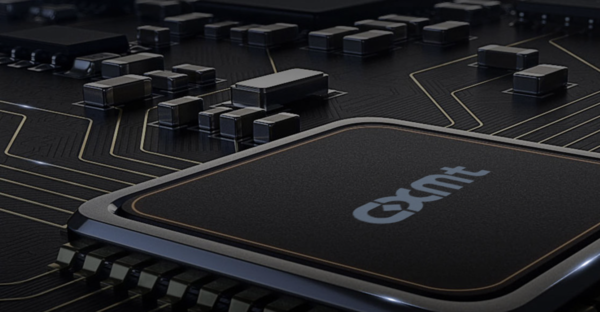
Apple is considering adopting products from Chinese memory maker CXMT as a prolonged memory supply shortage continues.
On July 21 local time, Japan's ITmedia reported Apple is currently evaluating CXMT memory products. It is also seeking assurances from the U.S. Commerce Department that CXMT will not be added to the export-control Entity List.
The Entity List is an export-control list that designates foreign companies and institutions the U.S. government deems a national security and foreign policy concern. If CXMT is included, sales and exports of Apple products using that memory could also face restrictions. Apple’s request for advance assurances is interpreted as preparation to launch products using CXMT memory immediately once it secures approval.
Some analysis says the move goes beyond simple supplier diversification and shows the supply shortage is lasting longer than expected. Apple raised product prices in June, and Chief Executive Tim Cook (팀 쿡) said rising costs in the memory industry were being reflected in consumer prices. He said he tried to absorb the sharp cost increases as much as possible, but said it was "no longer at a sustainable level," signalling pressure to raise prices.
The burden of component costs is also rising sharply. Market research firm TechInsights analysed that memory and NAND flash costs for the 2025-model iPhone 17 were about $52, but could rise to about $196 for the next-generation iPhone 18 based on 12GB DRAM and 256GB storage. The rapid rise in memory and storage prices over a short period means stronger pressure to raise product prices.
The memory industry, however, points to past price pressure from major customers as a cause of the current supply shortage. Micron Chief Business Officer Smeet Sadana (스밋 사다나) said in an interview last month that some customers’ demands for price cuts in 2023 were excessively hardline. He said that at those price levels it was impossible to make a profit, so many investment projects across the industry were halted.
Micron CEO Sanjay Mehrotra (산제이 메흐로트라) also said last month that producers could not continue normal investment because memory prices in 2023 fell to about one-third of the previous year’s level. Micron’s fiscal 2023 revenue fell 49 percent from a year earlier. DRAM revenue dropped 51 percent and NAND flash fell 46 percent, while average selling prices recorded declines in the high 40 percent range and low 50 percent range, respectively. Micron said the memory market deteriorated sharply as slowing demand in downstream industries coincided with customers’ inventory adjustments.
In the industry, some analysis says the current shortage is the result of explosive memory demand in the artificial intelligence era colliding with past investment cutbacks. Memory makers are resuming investment to expand production capacity, but the point at which actual capacity increases take effect is being discussed as likely to come after 2028.
In this situation, Apple’s review of CXMT is also read as a sign that a supply-structure shift is beginning that is difficult to resolve through price bargaining power alone. Tensions are expected to continue for some time between Apple, which is seeking to broaden memory procurement sources, and the memory industry, which wants to regain investment capacity on the back of recovering profitability.
 Jinju Hong
hongjj@d-today.co.kr
Jinju Hong
hongjj@d-today.co.kr