
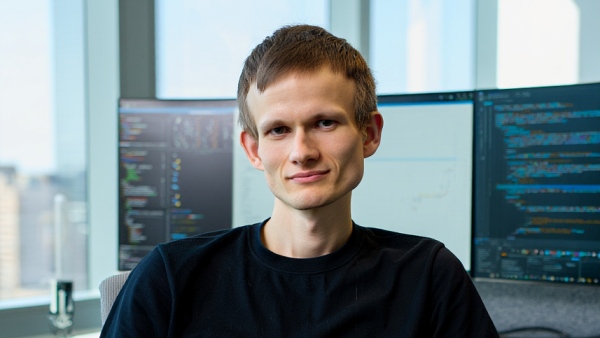
Ethereum co-founder Vitalik Buterin (비탈릭 부테린) said artificial intelligence is not something that replaces humans in one go, but is developing by gradually expanding the range of tasks it can perform well and encroaching on human domains.
On July 20 local time, blockchain media outlet U.Today reported that Buterin, describing recent AI development, argued that simply comparing humans and AI using a single intelligence or productivity metric does not properly reflect reality.
He said, "People are comparing AI and humans in the wrong way," adding that humans and AI should be understood as combinations of diverse capabilities rather than a single ability.
Buterin said human capabilities include not only physical abilities such as walking and handling objects by hand, but also cognitive abilities such as strategic thinking, emotional intelligence and mental arithmetic. He said competition between AI and humans is not a matter of deciding superiority with a single score, but of examining which side is better at each individual task.
To explain this, he cited machines from the 1500s. At the time, water wheels and windmills performed far better than humans in certain tasks that used natural energy, but humans still held an advantage in most other areas. Buterin said AI today is developing in a similar way, but the speed and scope are much greater than in the past.
He said, "Today AI has started to surpass humans in various fields beyond the range people expected," adding, "It is not replacing humans overnight, but as technology advances it continues a process of crossing one capability after another in sequence."
He argued that the criteria for evaluating AI development should also change. Rather than asking whether AI is smarter than humans overall, he said it is more suitable for understanding technological progress to look at how much the range of tasks AI can perform at or above human level has increased.
Buterin stressed that AI's evolution should be seen not as a single composite score but as an expansion of applicable areas.
His remarks also align with a trend in which AI competitiveness is shifting beyond simple performance metrics to the scope of work that can actually be used. Buterin stressed that the relationship between AI and humans should not be seen in the binary terms of "replacement", but that people should examine which areas of human advantage are collapsing first.
Ultimately, Buterin said, the key in the AI era is not how much smarter AI is than humans, but how quickly it can come to take over tasks humans used to perform.
 Jinju Hong
hongjj@d-today.co.kr
Jinju Hong
hongjj@d-today.co.kr