
[DigitalToday intern reporter Seung-a Yoo] Tesla’s 2026 Model 3 and Model Y further strengthen screen-centered controls, and they have changed so that drivers cannot use even steering assist unless they subscribe to Full Self-Driving (FSD).
On July 17 (local time), electric vehicle outlet Cleantechnica reported that a user who had been driving a 2019 Tesla received delivery of a 2026 Model Y on May 26 and cited the biggest changes as the shifting method and the driver-assistance feature lineup.
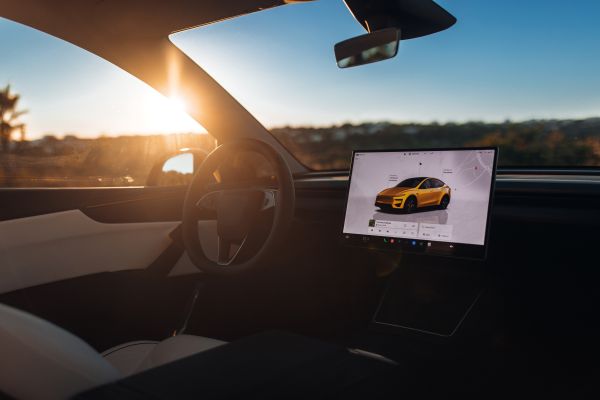
The most noticeable change is gear operation. In the 2026 model year, Tesla removed the existing right-side lever and moved the forward and reverse switching function to the center screen. It is not a button press, either. Drivers must shift by swiping the vehicle avatar up or down. The user said the biggest inconvenience right after delivery was switching into reverse, saying, "I don't like having to reach for the screen every time to switch between forward and reverse." An automatic forward and reverse switching function is also included, but after using it for two months, the user said, "It only worked occasionally."
Some improvements were also cited for physical controls on the steering wheel. The left scroll wheel handles mute, volume and track changes. The right scroll wheel changed from setting speed by number to selecting by cycling through driving-preference settings. The user called this a "big improvement." Pressing the right wheel turns autonomous-driving functions on and off, and left and right buttons can control high beams, wipers, the microphone, and switching the front and side camera displays. "Except for the removal of physical forward and reverse controls, the new controls are excellent," the user said.
Seat controls differ by trim. The premium trims of the 2026 Model 3 and Model Y keep physical switches on the side of the seat, but the base Model Y adjusts seat position on the screen. Still, the response was that it is not a big problem if drivers do not change seat settings often.
Another change that consumers strongly feel in this model-year update is the driver-assistance feature lineup. From the launch of the Model S in 2012 through the 2025 model year, Tesla provided smart speed control and steering assist together, but from the 2026 model year drivers cannot use steering assist unless they subscribe to FSD. The user criticized this as "blackmail" to push a $99-a-month FSD payment. The user added that because it is a function with strong necessity on long trips, drivers who do not travel long distances often could choose to use FSD only by the month when needed.
A gap between hardware and software was also mentioned. The user said they bought a permanent FSD license in 2019 for $6,000, but the function was limited at the time. Software updates followed, and in 2023 the user assessed FSD V12 as having developed into a capable automated driving system in many situations. But from mid-2023 Tesla applied 'HW4' to new cars, with a more powerful computer and high-performance cameras, and FSD on older cars stopped at V12. In newer cars, development of FSD V14 continued, and that version was receiving good reviews, the user said.
In trim selection, the practicality of the higher model stood out. The base Model Y is about $6,000 cheaper, but the premium trim offers a 75-kilowatt (kW) battery, a 357-mile (about 570-km) range under U.S. Environmental Protection Agency (EPA) standards, and faster charging performance. The base version has a 60 kW battery and a 321-mile (about 520-km) EPA range. The premium audio system was also described as superior, with two subwoofers cited as a differentiator. Another view was that differences in battery capacity, range and charging speed are more important for purchase decisions than design elements such as front and rear light bars and interior mood lighting.
Air-quality-related specifications were also presented as a differentiator. The premium trim includes a HEPA filter, and the base version is equipped with two filters to improve air quality. The explanation was that the perceived value of the HEPA filter has increased in a situation where smoke pollution has recently continued from the residential area to the Atlantic coast.
This case shows that Tesla, in the 2026 model year, has revised both the control interface and the way it provides features beyond a simple partial update. The expansion of screen-centered controls can be read as pushing Tesla’s design philosophy further, but how reduced physical controls and charging for steering assist affect the actual user experience remains something to watch.
 Seung-a Yoo
ysah@d-today.co.kr
Seung-a Yoo
ysah@d-today.co.kr