
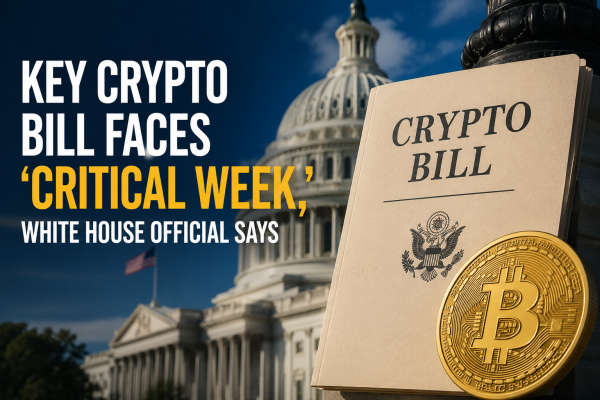
The White House said consideration this week of the Clarity bill, which would overhaul the regulatory framework for the crypto industry, is a critical turning point.
On July 13, blockchain outlet U.Today reported that White House crypto adviser Patrick Witt stressed that this week is a decisive moment for the bill.
In a post on Elon Musk's X, formerly Twitter, Witt wrote: "A critical week for Clarity." He added: "It brings back to mind the enormous effort put into this bill and the time already lost. We can no longer afford delay." That follows the White House recently urging the Senate to move quickly, further raising the level of legislative pressure within the administration.
The Clarity bill is being discussed as key legislation to rewrite the rules for the U.S. crypto industry. The White House also cited geopolitical competition as a reason to speed passage. It said the world's second-largest economy, which is larger than the United States in economic size, is moving to secure leadership in artificial intelligence and crypto, and passage of the Clarity bill could help the United States maintain its leading position.
Still, passage is not effectively assured. Polymarket data showed the likelihood that the so-called "crypto rules" bill will be signed into law within this year at 40 percent. That suggests market participants do not see a high chance of Senate passage despite the White House's public pressure.
The Senate hurdle is high. The bill passed the House in July last year, but in the Senate it needs at least 60 votes because of filibuster rules. For now, clearing that bar is seen as a very difficult task. The bill passed the Senate Banking Committee in May and moved to the stage of a floor vote, but a full vote has not yet taken place.
Concerns within the Democratic Party are also a variable. Differences remain over stablecoins, decentralised finance, memecoins and other technical details. Ethical issues are also cited as a key point in the process of securing at least 7 Democratic votes. Some Democratic lawmakers agree the bill could help innovation and job creation, but have not set aside concerns about the possibility of corruption.
Against this backdrop, Senator Cynthia Lummis, a leading Republican bitcoin supporter, recently warned that the bill could be delayed until 2030. That reflects a view that legislative momentum could change significantly depending on the midterm election results.
As a result, the outcome of negotiations in the Senate this week is increasingly likely to determine the bill's near-term fate. The White House is demanding speed, saying it can no longer afford delays, but bipartisan vote consolidation and resolving issues within the Democratic Party remain key to enactment.
 Jinju Hong
hongjj@d-today.co.kr
Jinju Hong
hongjj@d-today.co.kr