
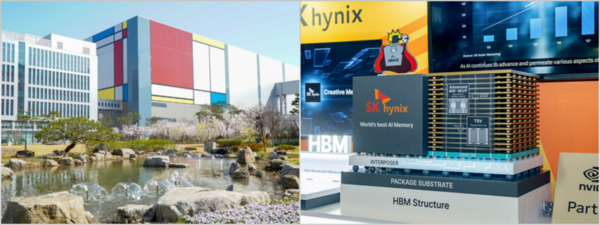
A court partly granted Samsung Electronics' request for a preliminary injunction to bar NAND flash design staff who moved to SK Hynix. The ruling restricts employment at SK Hynix for 1 year and 6 months after resignation, shorter than the 2 years Samsung sought.
Legal circles said on July 13 that the Suwon District Court's Civil Division 31, led by Presiding Judge Shin Woo-jung (신우정), partly upheld Samsung's request for a non-compete injunction against two former employees, including a person identified as A. The court ruled they must not work for SK Hynix and its affiliates, or provide labor such as consulting, until April 30, 2027, which is 1 year and 6 months after resignation. It also ordered indirect enforcement requiring them to pay 5 million won a day to Samsung Electronics if they violate the decision.
A and the other worker were mid-level managers who worked for about 10 to 11 years in Samsung Electronics' memory business and handled key NAND flash design. They were understood to have dealt with information that could weaken Samsung's competitiveness if it went to a rival, including the design direction and development schedule for next-generation products. They left Samsung in October last year and moved to SK Hynix in February this year.
The issue in the case was how broadly to recognize the validity of an agreement signed at the time of hiring that barred employment at competitors for 2 years after resignation. Courts have recently tended to strictly assess companies' requests for non-compete orders, emphasizing freedom of occupation, but Samsung's arguments were accepted to a significant extent in this case.
The court cited that NAND flash design qualifies as a national core technology, that the two employees knew key design information and that Samsung Electronics had managed them separately as key personnel. It also viewed as an unfavorable circumstance that they resigned while concealing the facts, citing reasons such as further study even as they prepared to change jobs.
The court said the technology falls under national core technology or national advanced strategic technology and has greater value to protect. It said exposure to a competitor could shorten the time needed to achieve equivalent technology, but would inevitably cause a corresponding loss of competitiveness for the applicant. The court added that there is a need to establish a fair market economic order amid intense competition in semiconductor-related fields, and that the non-compete agreement cannot be considered invalid solely because it partly restricts the debtor's freedom of occupational choice.
The court, however, reduced the non-compete period from the 2 years Samsung claimed to 1 year and 6 months, saying that even if the need to protect the technology is recognized, banning employment at competitors for 2 years could excessively infringe on freedom of occupational choice.
 Seok Dae-geon
d2dg@d-today.co.kr
Seok Dae-geon
d2dg@d-today.co.kr