
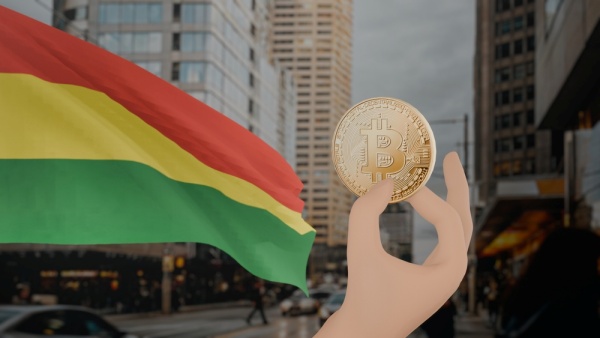
Bolivia's government is reviewing a plan to include Tether's stablecoin USDT in the country's official payment system.
Cryptopolitan, a blockchain media outlet, reported on Sunday that the Bolivian government is examining whether it can approve USDT as a means of payment alongside the boliviano and the U.S. dollar.
Economy Minister Jose Gabriel Espinosa (호세 가브리엘 에스피노사) said at a recent news conference that authorities are reviewing a plan that would cover banks, digital wallets and payment service providers. USDT currently has no official regulation or legal tender status. "We are evaluating whether we can include USDT in the Bolivian payment system," Espinosa said. "The goal is to have it circulate as a single currency, like the dollar or the boliviano," he said.
The review is seen as a move to bring expanding local use of USDT into the formal system. As cash dollars have become scarce, more cases have emerged in Bolivia of using USDT to preserve savings value, pay for imports and send remittances. The ability to transact without using cash or traditional financial networks has been cited as a factor.
If USDT is adopted as an official payment option, those transactions would move into a regulated, formal financial system. The market has also grown rapidly since Bolivia's central bank lifted a ban on cryptocurrency trading in June 2024. Central bank data showed crypto trading volume rose 630 percent to $294 million in 2025 from $46.5 million in the first half of 2024, and the country moved earlier this year from a fixed exchange-rate regime to a floating exchange-rate regime.
The policy stance is also changing. Bolivian President Rodrigo Paz Pereira (로드리고 파스 페레이라), who took office in November last year, has set out a position to expand the role of the banking sector in digital assets. The plan goes beyond payments and includes deposit accounts and loans linked to digital tokens.
Banks have already introduced some related services. State-owned Banco Union enabled customers in April to buy USDT in its Yasta wallet, and Banco FIE in the same month opened a "Cuenta Cripto" account for buying and selling USDT.
The spread of USDT payments has also appeared among vehicle sellers. Tether Chief Executive Paolo Ardoino (파올로 아르도이노) has said that Toyota, BYD and Yamaha dealerships in Bolivia began accepting USDT for vehicle sales in September last year.
Still, significant hurdles remain before integration into the formal system. Bolivia is currently on the Financial Action Task Force grey list. That indicates international concern remains over weaknesses in anti-money laundering controls. The government would need to strengthen safeguards to block related risks if it adds USDT to the official payment system.
Another variable is that a sizable population lacks bank accounts or has difficulty securing stable internet access. Even if Espinosa's idea of "circulating as a single currency" is realised, USDT alone would not resolve issues of payment infrastructure and financial access, leaving those questions as a key issue for future system design.
 Yoonseo Lee
yslee@d-today.co.kr
Yoonseo Lee
yslee@d-today.co.kr