
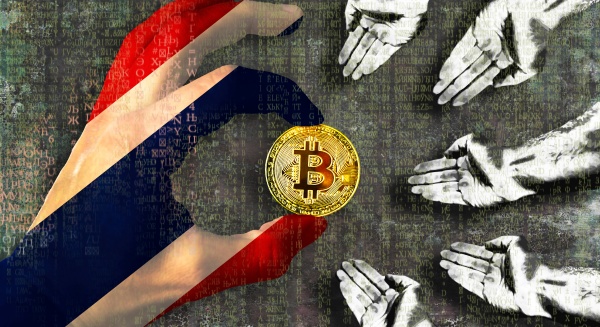
[DigitalToday reporter Yoonseo Lee] Thailand's central bank has begun monitoring large stablecoin transactions centred on USDT to crack down on money laundering, illegal finance and so-called grey money.
Cointelegraph, a blockchain media outlet, reported on Sunday that the central bank, together with Thailand's Securities and Exchange Commission, is auditing USDT, cash transactions and currency exchange transactions to identify and block illicit fund flows.
The move comes as call centre crimes linked to Chinese scam groups spread across the region. The grey economy targeted by Thai authorities refers to the circulation of cash of unclear origin. It can include funds from suspicious routes such as scam call centres.
The central bank is watching closely as stablecoins are being used rapidly as a means of large cross-border fund transfers. It judges that stablecoins can also be used to move illicit funds because payments are made almost instantly. Bank of Thailand Governor Vitai Ratanakorn (비타이 라타나콘) said in an interview with local media outlet The Nation that "the measures we are implementing do not end in the short term" and that it would "pursue multiple strategies at the same time".
The scope of monitoring does not stop with stablecoins. Commercial banks' compliance obligations will expand to cover cash networks, currency exchange booths, gold bar transactions and suspicious stablecoin transactions. The aim is to prevent regulated institutions from being used as channels for corruption or illegal deals.
Rules on cash transactions will also be tightened. Large cash transactions will require reporting of the source of funds, and the monitoring scope will include large-scale exchanges of high-denomination bills into smaller bills without a clear reason. Cash deposits exceeding 5 million baht will require full disclosure of all funds.
Thailand has often been cited as a crypto-friendly region, but the central bank still bans payments using digital assets and stablecoins. Crypto trading itself is legal. Thailand's largest exchange, Bitkub, has daily trading volume of about $26 million, or about 38.8 billion won, and CoinGecko said nearly 40 percent of that was counted as foreign exchange-type transactions. Among trading pairs, USDT/THB accounted for the largest share.
Against that backdrop, Thailand's financial sector has already carried out a sweeping account crackdown. Thai banks froze or restricted 3 million bank accounts in 2025 as part of a crackdown on mule accounts, grey money and suspicious transactions. However, the action at the time also ensnared thousands of individual investors and legitimate companies, and drew criticism locally that "the enforcement method was wrong".
The latest move focuses on linking stablecoin transaction monitoring with existing cash regulations to scrutinise overall fund flows. As a result, the Thai market has seen a growing possibility that banks and exchanges will further strengthen verification procedures for large stablecoin transactions including USDT, regardless of the legality of crypto trading.
 Yoonseo Lee
yslee@d-today.co.kr
Yoonseo Lee
yslee@d-today.co.kr