
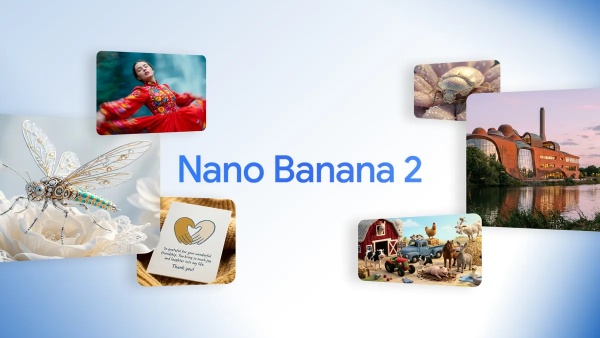
Google has launched an image-generation model called Nano Banana2 Lite and is moving to target demand for low cost and high speed.
Decrypt, a blockchain media outlet, reported on July 11 local time that the model can generate a 1K-resolution image for about $0.034, or roughly 50 won, per image. It is known to cost about half as much as Nano Banana2 at the same resolution while processing 2.7 times faster.
The official name of Nano Banana2 Lite is Gemini 3.1 Flash Lite Image. Google positioned it as an entry-level product to replace the existing Nano Banana. The service can be used on Google AI Studio, the Gemini API and an enterprise agent platform, and it has also been applied to consumer services such as Search, the Gemini app, NotebookLM and Google Photos.
The product lineup has also become clearer. Google classified Lite as a model focused on speed and cost, Nano Banana2 as a balanced model for quality and speed, and Nano Banana Pro for complex professional work. Along with Gemini Omni Flash, a video-generation model, it also supports up to three consecutive edits within a session through an interactive API.
The key is price competitiveness. Nano Banana2 costs $0.067 per image at the same 1K resolution, or about 100 won. Lite has entered a similar range to Seedream 5.0 Lite at $0.031 to $0.035 per image, or about 45 to 52 won, and is more expensive than RIV 2.0, which costs about $0.0067 per image on an API basis. Google, however, highlighted the breadth of its deployment in linking the same model across Search, NotebookLM, Google Photos and the Gemini app.
Performance comparisons showed clear differences depending on the type of task. In a portrait realism test, Lite handled the basic composition and props but showed limits in fine detail. Hand proportions looked awkward, and skin texture and lighting were weak on close inspection. Nano Banana2, by contrast, produced more complete results in depth of background, separation of light and accuracy of prop placement.
The ability to follow complex prompts also differed. Both models matched the overall composition of a steampunk city scene, but Lite changed a balloon-labeled year to 1942 instead of 1842 or blurred part of a cable car sign, while Nano Banana2 was assessed to have reflected most elements accurately. In concept art or narrative illustration work that requires accurate text within a scene, higher-tier models were found to have an advantage.
Results differed in text generation, however. In a test that placed multiple signs and posters, notices, phone numbers and political stickers simultaneously in a nighttime hardware store scene, Lite produced most phrases in a readable form. Nano Banana2, due to darker and more atmospheric lighting, had some small phrases buried in shadow, reducing readability.
The gap between the two models was not large in spatial composition. In an alchemist workshop scene mixing foreground, midground and background, both models handled object placement and perspective structure stably. Nano Banana2 was richer in atmosphere and dimensionality, but Lite was also assessed to be at a level that could serve as a substitute for storyboards, game asset concepts and general edited illustrations.
Nano Banana2 Lite was assessed to be less a backward-compatible model than a low-cost option with a clear purpose. Higher-tier models are better for work that requires photo-like texture, sophisticated lighting, material expression and close-review quality. When cost and speed matter and text readability is key, such as sign drafts or brand graphics, Lite emerged as an option to consider first.
 Yoonseo Lee
yslee@d-today.co.kr
Yoonseo Lee
yslee@d-today.co.kr