
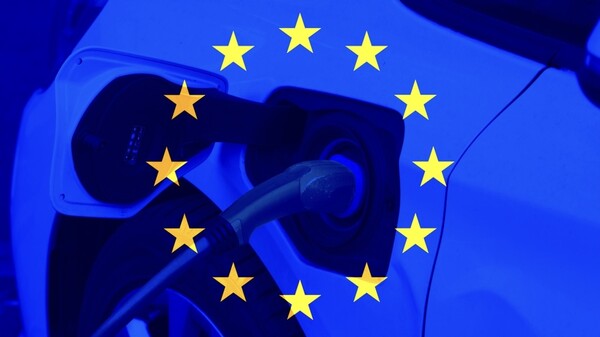
The head of the International Energy Agency (IEA) has publicly raised concerns that the European Union (EU) is moving far too slowly on electrification.
Cleantechnica, an electric vehicle outlet, reported on Saturday that electricity accounts for about 23 percent of the EU’s total energy use.
IEA Executive Director Fatih Birol (파티 비롤) pointed out that Europe’s energy supply chains suffered a major shock after Russia’s invasion of Ukraine, yet electrification in heating and transport has not progressed as much as expected. He called the situation “a big mistake for Europe” and said he had expected Europe to respond more sensitively to the crisis and believed it would do so.
Birol stressed that the EU needs to accelerate electrification going forward. He said the electrification rate in China, Japan and South Korea is all above 30 percent, and assessed that Europe is lagging behind them. He framed the issue as requiring a structural shift across heating, transport and industry to reduce fossil fuel use, rather than simply expanding power generation.
The criticism also ties into the energy security crisis Europe has faced in recent years. The outlet said Europe’s share of fossil fuel use remains high even after the Russia-driven energy shock. With conflict in the Middle East adding to global supply uncertainty, vulnerabilities from reliance on imported fossil fuels have resurfaced.
European Energy Commissioner Dan Jorgensen said the EU’s heating, transport and industrial sectors still rely on imported fossil fuels. Comments also noted that countries, including Britain, are busy responding to concerns over supply disruptions from the fallout of Middle East clashes. The report also cited U.S. air strikes that damaged oil fields and major ports, constraining global supply.
Market and industry trends have also been mixed. Europe’s auto industry has sought to lower carbon dioxide emissions standards and ease electrification requirements, and some have achieved results. With energy security, industrial competitiveness and transition costs intertwined, electrification policy has not been pushed through consistently.
Policy adjustments are continuing. The European Commission is set to unveil plans next week for member states to cut electricity-related taxes and support household adoption of heat pumps, electric vehicles and other green technologies. A core element is to keep taxes on electricity lower than those on fossil fuels.
The measures aim to lower cost barriers to electrification, but could strain national finances. Some countries rely heavily on tax revenue attached to electricity bills, making it difficult to adjust the burden. With wider rollout of heat pumps and electric vehicles unlikely to accelerate without changes to electricity pricing structures, tax reform has emerged as a factor that could determine the effectiveness of electrification policy.
Ultimately, the core of the debate is that Europe has failed to raise the pace of electrification sufficiently even after the energy crisis. Key questions going forward are whether the EU can use tax adjustments and subsidy policy to drive a real shift in heating and transport, and whether it can lift the electricity share to around 30 percent.
 Jinju Hong
hongjj@d-today.co.kr
Jinju Hong
hongjj@d-today.co.kr