
Meta has halted a feature that generated artificial intelligence (AI) images using public Instagram posts, days after its launch.
On July 11 (local time), Business Insider reported that Meta said on an Instagram blog that the feature was no longer available.
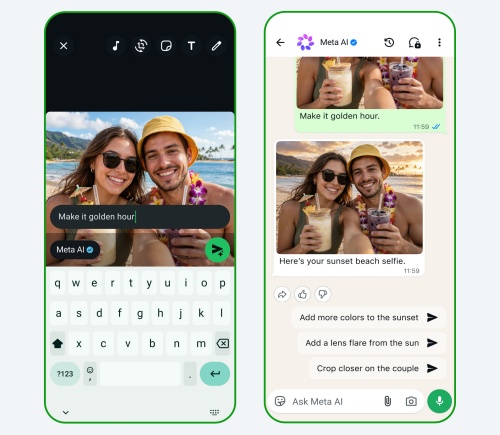
The feature allowed users to generate images based on their public posts. Users first encountered it on July 8, when Meta unveiled 'Muse Image', the first image-generation model from Meta Superintelligence Labs. Muse Image was provided through Meta AI, and other features for directly editing photos remain available.
Meta said on an Instagram blog it aimed to provide useful creative tools and to let users control whether their public content is referenced in this way. It said it halted the service after accepting reactions that the feature did not meet expectations.
The feature fuelled privacy concerns immediately after its release. Instagram users pushed back against the idea that their public posts could be used for AI training or image generation, and concerns were also raised that deepfake content could spread. Posts sharing ways to disable the feature spread quickly on communities including X, formerly Twitter, and Reddit.
The reaction from civil groups and the entertainment industry was also strong. Apar Gupta (아파르 굽타), a founding director of the Internet Freedom Foundation, criticised Meta in a video posted on X, saying Meta has infringed on users' privacy because it operates social media platforms.
SAG-AFTRA, a U.S. union for actors and broadcasters, also urged members to opt out of the feature. The group said using Instagram users' images requires a clear and conspicuous prior consent process, and argued that this type of use was a decision that misread public sentiment. It welcomed Meta's decision to roll it back, saying it was not wise to have a feature that encourages such behaviour when the risks of involuntary digital replication are already widely known.
Creative Artists Agency (CAA), which represents major entertainment agencies, also joined the criticism. The company said no third party should be able to use a person's name, image, likeness, voice or creative works without clearly documented consent, and said protecting creators' rights and livelihoods and ensuring meaningful control is the starting point for innovation.
The move shows that clashes between generative AI and creators' rights are becoming a growing burden across the platform industry. In the entertainment industry, there have been continuing warnings that AI can take likenesses, voices and even symbolic expressions without the subject's consent. Cases in which celebrities such as Matthew McConaughey and Jeremy Clarkson moved to register trademarks to protect their likenesses from AI align with this trend.
Similar controversy has recurred in other AI services. OpenAI faced backlash after launching its AI video generation platform 'Sora 2' in 2025, because it enabled content creation using trademarked characters. Entertainment companies including Studio Ghibli continued to raise issues, and OpenAI later formed a partnership with Disney for lawful use, but Sora 2 ended in March.
As Meta moved quickly to shut down the feature, the key standard for launching AI features has now remained the level of prior consent obtained from users and creators, rather than whether public posts are used.
 Yoonseo Lee
yslee@d-today.co.kr
Yoonseo Lee
yslee@d-today.co.kr