
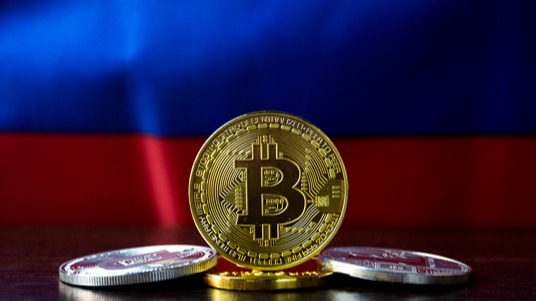
Russia's State Duma financial markets committee approved amendments to a cryptocurrency regulation bill, removing a provision that would have required residents of Russia to disclose wallet addresses.
On July 8, CoinPost, a blockchain media outlet, reported the amendments were prepared ahead of the second reading, and Financial Markets Committee Chairman Anatoly Aksakov (아나톨리 악사코프) disclosed the contents via his official Telegram channel.
The biggest change is a reduction in reporting items. The revised bill would require residents of Russia to report only their holdings and transaction volumes instead of submitting cryptocurrency wallet addresses. Aksakov said the step is intended to reduce the risk of personal data leaks and misuse.
It also expanded the scope of judicial protection. The revised bill newly includes a provision guaranteeing judicial protection for cryptocurrency holdings regardless of whether they were reported in the past. Aksakov explained that this reflects the Constitutional Court's view.
Rules for individual investors would keep the distinction between qualified and non-qualified investors, but restrict non-qualified investors to investing only in highly liquid cryptocurrencies. It also sets an annual buying cap of 300,000 roubles, about 5.9 million won, per regulated broker. The structure keeps market access open for individual investors but limits eligible assets and scale.
Controls on fund transfers were also strengthened. Regulated exchanges would be restricted to sending purchased cryptocurrency only to the buyer's own wallet. For large transfers sent overseas or to third parties, a 48-hour holding period would also be required. The revised bill includes these rules as measures to prevent illegal activity.
The bill also includes payment infrastructure for foreign trade companies. Companies would be able to conduct international payments using cryptocurrencies and stablecoins through domestic and overseas infrastructure. The step is in line with a move to bring cryptocurrencies into the formal system as an external means of payment.
Russia has implemented a legal framework since July 1 allowing import and export companies to use bitcoin and stablecoins for foreign trade payments. Transactions are possible only on 8 platforms approved by the central bank. Foreign trade using cryptocurrencies in 2025 was tallied at 1 trillion roubles, about 19.8 trillion won, with trade with China, Turkey and India at the core.
Russia's central bank is also pushing the rollout of the digital rouble. The central bank governor said at a central bank conference held this week that all preparations for broad deployment had been completed. Russia is accordingly moving forward with procedures to require 12 systemically important banks and major retailers to accept the digital rouble by Sept. 1.
The amendments will go through a second reading before entering full deliberation. Aksakov, however, made no separate mention of whether to regulate the use of self-custody wallets. Whether Russia's overhaul of its crypto system will move toward simultaneously expanding external payments, controlling individual investment and rolling out the digital rouble will be a focus in the additional legislative process.
 Yoonseo Lee
yslee@d-today.co.kr
Yoonseo Lee
yslee@d-today.co.kr