
Oracle is stepping up efforts to energise the community as part of expanding its open-source database MySQL. As part of that, it also revamped its governance system.
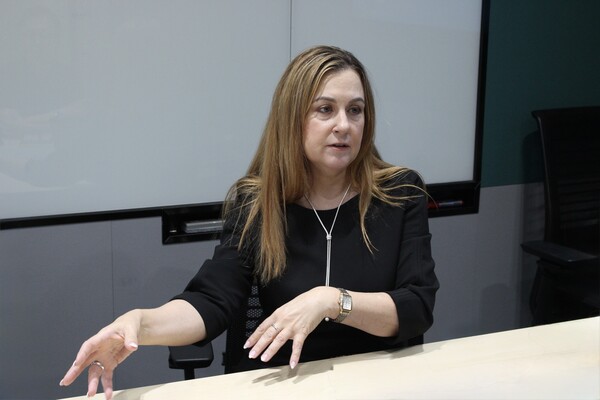
Heather VanCura (헤더 벤큐라), Oracle vice president for external standards and community engagement, said she first unveiled the MySQL community strategy in Boston in January and has since visited Japan, South Korea and Taiwan to communicate directly with the Asian community. She stressed expanding the ecosystem with the community at its centre.
She said the MySQL community strategy can be summed up as introducing new features and innovation to the community edition, strengthening transparency in the development process and expanding contributions through the community.
Oracle is pursuing community activation in three phases. Phase one opens some features previously provided only to paid customers to the community edition and strengthens transparency. Phase two focuses on introducing an official governance system and improving the experience of contributors who participate in the project in various ways. Phase three aims to create an environment where Oracle and external contributors collaborate in the same space. VanCura said Oracle is currently going through phase two and that phase three could be completed around October.
On key outcomes from phase one, VanCura highlighted MySQL 9.7, released in April. She said MySQL 9.7 is a long-term support version and for the first time included some features exclusive to paid customers in the community edition. She said Oracle also held its first contributor summit and is moving toward having Oracle and community members jointly develop an open roadmap. The roadmap can be viewed by anyone on GitHub, she said.
VanCura also highlighted disclosure of vulnerability information. She said Oracle previously provided quarterly patch updates to paid customers, but now separately discloses community edition vulnerability information on its website.
Oracle is also actively working to clear its bug backlog. VanCura said Oracle identified 2,000 unresolved issues received since January and handled nearly 700 by May. She said it continues to share the status of quarterly updates with the community.
In phase two, now under way, Oracle introduced an official governance framework. VanCura said this clarified roles for contributors, committers, project leads and a steering committee.
In open-source projects, a committer refers to a developer with the authority to review source code and contributions proposed by external contributors and to merge them into the project.
VanCura said committers and project leads can participate from outside Oracle as well as from within it. The steering committee, with Oracle, AWS and Google Cloud as initial members, oversees the overall MySQL ecosystem, she said. She added that Oracle also set up a separate private group to respond to vulnerabilities and jointly handle security issues.
VanCura said phase three, targeted for completion in October, will also conduct Oracle's contributions and commits openly on GitHub so external contributors and Oracle contributors can carry out pull requests and code reviews in the same space. A pull request is a GitHub collaboration feature in which a developer proposes or requests that modified code be merged into the original source code.
VanCura also underscored that MySQL is making AI one of its top priorities. She said it is discussing native vector support and that MCP integration is also included in the roadmap.
 Chi-gyu Hwang
delight@d-today.co.kr
Chi-gyu Hwang
delight@d-today.co.kr