
[Digital Today reporter Jin-ho Lee] When a product image is inserted into finished video, it blends naturally with the flow of the footage. Brightness and color shift with surrounding lighting. If someone passes in front, part of the product is naturally obscured. Without additional filming or complex manual work, AI analyses the space and motion in the video and composites the image as if it had been there from the start.
That is made possible by InsertAnywhere, an AI video compositing technology jointly developed by SK Telecom and KAIST. It can complete compositing work that took days to weeks on production sets in as little as a few hours.
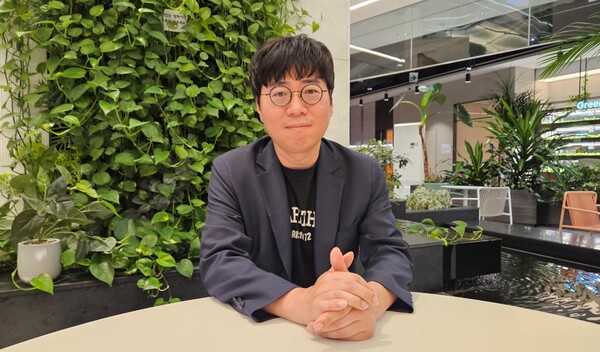
Na Tae-young (나태영), head of SKT's Enterprise Solution Development Team, said in a recent interview with Digital Today that AI tools that automatically composite advertising images existed before, but in practice people often handled much of the work manually. InsertAnywhere is different in that the output really comes out “in a snap,” he said.
◆ Reads the flow of video to composite images naturally
InsertAnywhere is a technology that naturally inserts products, props, characters and brand logos that could not be captured when the original video was filmed. When a user specifies where to place an image, AI applies it across the full video.
It differs from simply adjusting an image’s color and pasting it over a video. Using “4D scene understanding” technology that adds the passage of time to a 3D spatial structure, it analyses the movement of the camera and objects, surrounding lighting, reflections and shadows together. The core of InsertAnywhere is to make images and video created in different environments blend naturally into a single scene.
For example, if a car image is inserted into footage, reflections that match the surrounding lighting and space are also rendered on the glass or surface of the vehicle. In a video of a fashion model showing a dress fitting, it is also possible to change only the clothing and dress the model in a different product. The AI-applied outfit blends naturally as if the model is actually wearing it, matching the model’s movement and the camera work.
Product images and corporate logos used in advertising need to be shown clearly, but if they stand out too much they can disrupt immersion. SKT also provides functions that let users choose compositing strength and color tones so advertisers can adjust exposure while producers maintain natural-looking video.
◆ From weeks to hours... more than 90 percent of work automated
InsertAnywhere was developed as a core technology for SKT’s virtual product placement (VPPL) solution AdFlux. InsertAnywhere began joint research in 2025 with the KAIST research team led by Professor Jae-geol Joo. A related paper was accepted to ECCV 2026, a major computer vision conference to be held in Malmo, Sweden, in September. SKT has also completed a patent application for the related technology.
AdFlux, which applies InsertAnywhere, has been used in broadcast programmes including “Kkeutkkaji Ganda Dokbak Tour,” “Uri Jigeum Manna,” and “Bakjangdaeso- Bureumyeon Eonjedeun Kol.”
Lower-difficulty compositing such as logos or signboards can be handled within hours. Scenes where products are intricately intertwined with other objects or appear for long periods require more time, but it can significantly reduce production time compared with manual methods, he said.
Na said he had heard stories in the past of commissioning AI compositing and still not getting results after 15 days. With InsertAnywhere, simple tasks can produce results within 1 to 2 hours, and work that used to take several weeks can be cut to at most about 2 days, he said.
He added that SKT believes it has automated more than 90 percent of the current compositing process. The remaining part is for people to check whether the AI output matches customer preferences and requirements and to make corrections, he said.
◆ Expanding beyond advertising to film, commerce and YouTube
SKT plans to expand InsertAnywhere to video production fields beyond advertising. Applied to post-production for films or dramas, it could add props needed after filming or insert objects from past eras that are hard to obtain today. That could reduce the need to make or buy all the props required for historical dramas or period productions, and help independent films and small to mid-sized producers cut costs while improving the completeness of their video.
Na said video and film production still has a high share of work that people must handle one by one, and that this burdens small and mid-sized producers making content. He said he wants to provide the technology to independent films and smaller production companies so anyone can create content more easily.
Commerce is also a potential market. If a seller applies multiple clothing images it owns in sequence to a video a model filmed once, it can cut the cost of casting models for each product and filming again.
SKT is also testing a method in which AI pulls product images when an online shopping mall address is entered and changes the clothing of people in a video. It is considering offering that function to commerce operators after upgrading it.
Interest is also emerging overseas. Na said that after the paper and technology became known, a proposal came in from Turkiye to try a business targeting local broadcasters and influencers. He said SKT is discussing various possibilities for cooperation.
◆ API and SaaS possible... “Lower the barrier to compositing images into video”
InsertAnywhere is currently provided within AdFlux, but if market demand is confirmed it is also possible to offer only core functions as a separate application programming interface (API). SKT has also left open the option of expanding it into software as a service (SaaS) or an editing tool for video creators, where customers upload images and video, specify only the insertion location, and receive the output.
Na said SKT is technically ready to provide the core functions of InsertAnywhere via an API. If there is demand, there is no major technical barrier to providing it as a separate service through SK Group’s open API platform, he said.
If the technology is opened to general users, however, preparations are needed for potential misuse such as deepfakes or unauthorised compositing. SKT plans to prevent such side effects in future open services through logins and user verification, watermarks and notices of terms of use.
SKT’s development of video compositing technology is based on its AI capabilities and its media business as a commercial foundation. Through SK Broadband it runs IPTV and broadcasting businesses, and it also has business bases where it can apply the technology, including advertising, commerce and video services.
Na said SKT is a telecommunications company but media is also one of its major business areas. There are many areas where AI video technology can be applied across the company’s businesses, including SK Broadband, advertising and commerce, he said.
He said the technology was initially developed to fit a specific market of virtual advertising, but its uses are limitless across video production, film and commerce. The goal is to expand it into a technology many people actually use and that can reduce the burden of content production, he said.
 Jin-ho Lee
jhlee26@d-today.co.kr
Jin-ho Lee
jhlee26@d-today.co.kr