
A first direct-current subsea power transmission project linking Europe and North Africa into a single grid has moved into full implementation.
Electrek, an electric vehicle outlet, reported on Wednesday that Italy's grid operator Terna and Tunisia's state electricity and gas utility STEG selected Hitachi Energy as the contractor to build converter stations for the ELMED interconnection project. The contract is worth about 770 million euros, completing key procurement procedures for the high-voltage direct current (HVDC) link.
ELMED is a project to connect Italy's Sicily and Tunisia with a 600 megawatt (MW) transmission line. The total length is about 220 km, with most of the route crossing under the Mediterranean seabed. In the Strait of Sicily, cables are set to be installed at depths of up to about 800 metres.
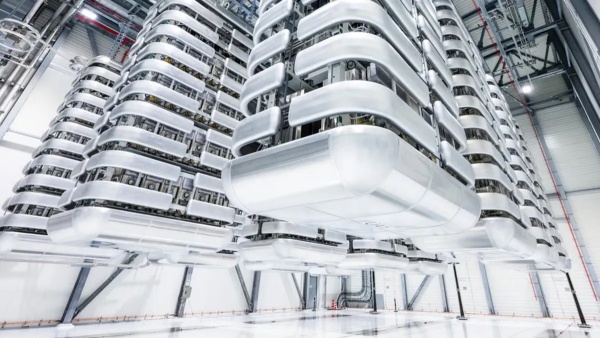
Converter stations to switch between direct current and alternating current will also be built in each country. In Italy, the station will be in Partanna on the island of Sicily, and in Tunisia it will be in the Mlabi area near Menzel Temime in the northeast. Hitachi Energy will supply core HVDC equipment including converter valves, the MACH digital control platform, power transformers and high-voltage switchgear, and will be responsible for design and engineering, installation supervision and commissioning.
HVDC, the project’s key technology, is the most widely used method for long-distance subsea transmission. It has lower power losses than alternating current (AC), offering higher efficiency over long distances, and can stably connect power grids of different countries.
Once completed, Europe and North Africa will be linked for the first time by a direct-current-based subsea power grid. The two regions will be able to exchange electricity in both directions, and expanded use of renewable energy and improved supply stability are also expected.
Civil works will be handled by Italy’s D’Agostino Costruzioni Generali and Tunisia’s Orascom Construction, respectively. Total project costs amount to about 1.42 billion euros.
The ELMED project is a core initiative under Italy’s Africa cooperation strategy, the Mattei Plan, and also aligns with the European Union’s energy strategy, REPowerEU. The EU is supporting the project as key infrastructure to diversify supply sources and expand integration of renewable energy grids.
Financing is also being arranged as international cooperation. The European Commission decided to provide 307 million euros through the Connecting Europe Facility (CEF). It is the first time the EU has directly funded an energy infrastructure project involving a non-EU country.
On the Tunisian side, the World Bank (WB), European Investment Bank (EIB), European Bank for Reconstruction and Development (EBRD) and Germany’s KfW are also participating in financial support.
Industry sources see ELMED as an opportunity to expand the power trading market between Europe and North Africa, beyond simply building a transmission line. With a subsea link crossing the Mediterranean, converter stations in both countries and multilateral financing combined, attention is focused on what results it will deliver for expanding renewable energy connections and building a stable power supply system.
 Jinju Hong
hongjj@d-today.co.kr
Jinju Hong
hongjj@d-today.co.kr