
South Korea's financial authorities discussed a plan to implement scraping blocking in phases after preparing alternative measures such as public MyData to reduce inconvenience for financial consumers caused by scraping blocks by administrative bodies and the Supreme Court.
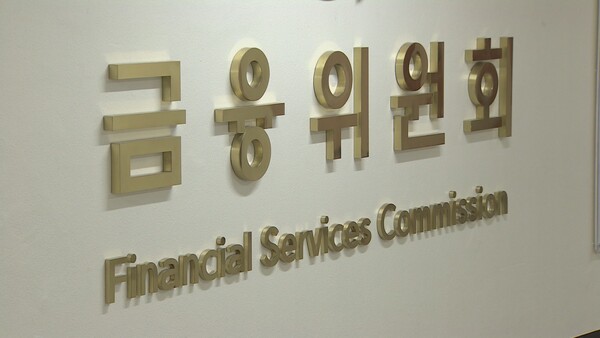
The Financial Services Commission (FSC) on Tuesday held a financial sector inspection meeting on scraping blocking, attended by the Personal Information Protection Commission, financial associations, financial companies and related institutions. It reviewed the impact of scraping restrictions on the financial sector and consumers and checked response directions.
Scraping is widely used in non-face-to-face financial transactions to reduce procedures that require consumers to submit administrative documents in person.
It is used, for example, in mortgage loans, jeonse deposit loans, opening bank accounts for minor children and checking heirs. With consent, it is used to confirm relevant information in the Supreme Court system instead of having consumers submit supporting documents needed to verify family relationships.
The financial sector said it was concerned that restricting scraping could cause significant disruptions across non-face-to-face financial operations. Consumers could be put in a situation where they must issue relevant certificates themselves and submit them to financial companies.
Internet-only banks, which have relatively fewer in-person branches, were expected to face a bigger operational impact from scraping blocking in particular.
Policy finance could also be affected. Housing and Urban Guarantee Corp (HUG) and Korea Housing Finance Corp (HF) currently verify eligibility requirements for people without homes and newly married couples through scraping. Regulators judged that if scraping is blocked, support for home purchases and jeonse funding could be delayed, causing inconvenience for ordinary people and vulnerable groups using policy finance.
Meeting participants agreed with the purpose of scraping blocking to protect and transmit personal information safely, while also agreeing that the system should be implemented only after sufficient alternatives are prepared.
With non-face-to-face financial transactions having become routine, they said it is necessary to implement the change in phases after a preparation period for linking to public MyData and other measures to replace scraping, in order to minimize consumer inconvenience and confusion.
Public MyData is a system in which, at the request of the information subject, an administrative agency that holds the person's administrative information provides that information to public institutions or financial institutions.
The meeting also reviewed the security systems and internal controls that financial companies currently apply in the scraping process. Financial companies shared security measures, access controls and information security management systems applied to information collection, transmission and storage.
The FSC said it plans to work with relevant institutions to prepare response measures so that scraping restrictions do not cause consumer harm or disruptions in providing financial services.
 Ji-young Lee
ljy@d-today.co.kr
Ji-young Lee
ljy@d-today.co.kr