
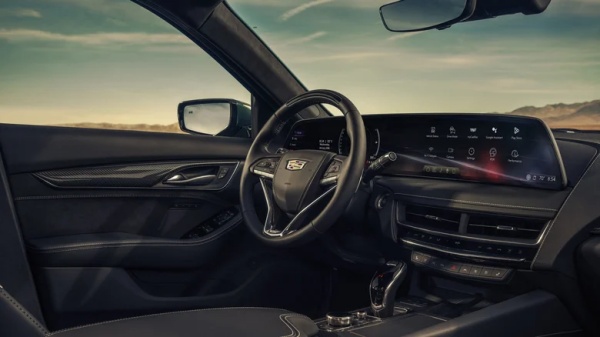
[DigitalToday reporter Jinju Hong (홍진주)] General Motors is raising the possibility it will expand its decision to exclude Android Auto from electric vehicles to all models. Analysts say the auto industry is shifting its focus from smartphone-based infotainment to in-house software and artificial intelligence-based platforms.
On June 20, local time, IT outlet Engadget reported that GM is considering expanding this policy to all vehicles after ending Android Auto support in its electric vehicles.
For years, connecting smartphones to cars to use navigation, music and messaging has effectively become a standard across the auto industry.
Google’s Android Auto and Apple CarPlay are representative examples. Automakers provided the vehicle hardware, and consumers used a familiar smartphone environment on the in-car screen. Engadget described this as akin to an "implicit agreement" between consumers and automakers.
But strategies by automakers have recently changed. GM is strengthening its own in-vehicle software ecosystem instead of Android Auto. It plans to introduce a conversational vehicle interface based on Google’s generative AI model Gemini. This is seen as an attempt to bring control of the in-car digital experience to the automaker’s own system rather than a smartphone platform.
Some electric vehicle makers did not rely on smartphone mirroring from the start. Tesla and Rivian do not support Android Auto or Apple CarPlay and have built their own software environments. These companies view the vehicle itself as a digital platform and run navigation, entertainment and vehicle control functions within their own ecosystems.
The entire market is not moving in the same direction. Many 2026 model-year new vehicles are still expected to support Android Auto and Apple CarPlay. Still, the industry is watching the possibility that moves to build in-house platforms will expand further as vehicle software grows in importance.
Generative AI is also emerging as a new variable. GM’s push to adopt a Gemini-based vehicle interface is seen not simply as replacing smartphone connectivity, but as a strategy to redesign the in-car experience itself. Beyond playing music or navigation, features such as natural-language conversations with the vehicle and driver-tailored services could become key competitiveness.
There is also the possibility of consumer backlash. Many drivers cite the biggest advantage of Android Auto and Apple CarPlay as being able to use the same familiar smartphone environment even when they change vehicles. As a result, critics say conflict could grow between user convenience and control of platforms if automakers accelerate a shift to their own platforms.
The key question will be whether other major automakers make choices similar to GM. For now, many 2026 model-year vehicles are keeping Android Auto, but if the industry shifts weight toward in-house infotainment and AI-based vehicle software, smartphone integration could be pushed into an optional feature. Who will hold digital control inside the vehicle is emerging as the core of the next competition.
 Jinju Hong
hongjj@d-today.co.kr
Jinju Hong
hongjj@d-today.co.kr