
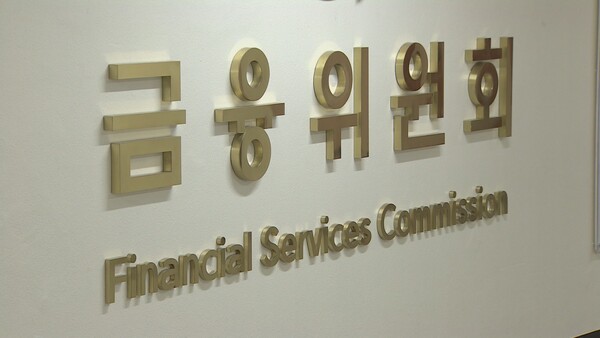
[DigitalToday reporter Ji-young Lee] Financial authorities are overhauling the financial regulatory sandbox to make it more fintech-friendly. The core is to lower entry barriers for fintech startups and prepare exit strategies so they can transition smoothly into regulated finance after the sandbox ends.
The Financial Services Commission said on Sunday it will revamp the innovative financial services system across its full cycle through measures to improve the financial regulatory sandbox in an innovation-friendly way.
The commission said it has identified a problem in the operation of the financial regulatory sandbox in which participation by fintech startups has declined and the system has become concentrated around financial companies.
Among firms designated under the financial sandbox, the share of fintech fell to 7 percent in 2025 from 56 percent in 2019. Based on cumulative approvals as of the end of 2025, financial companies accounted for 76 percent and fintech 14 percent.
The commission will first expand exclusive operating rights for promising innovative services. Exclusive rights are currently granted for up to 2 years after the sandbox ends and after formal licensing and approval are obtained, but it plans to apply them from the time of sandbox designation for services that need protection for innovative ideas.
It will also increase cost support for smaller businesses. Smaller businesses granted exclusive operating rights would see procedures simplified for support for commercialisation costs, and the cap for test cost support would be expanded to 200,000,000 won from a maximum of 120,000,000 won. The measures also include raising support for liability insurance premiums to 100 percent from up to 50 percent.
It will also revise screening standards for fintech startups. Rather than uniformly applying quantitative requirements such as financial soundness, it will focus on levels needed for consumer protection and basic service operations, while also reflecting qualitative factors such as growth potential and the potential to attract investment.
Additional conditions during sandbox operation will also be adjusted more flexibly. The system will be revised so conditions with low direct relevance to consumer protection or financial stability can be adjusted depending on how services are operating and on market conditions.
Support for transitions into the regulated system after the sandbox ends will also be strengthened. The commission will bring forward the timing for reviewing regulatory improvements for innovative services to as early as 1 year from the start of service, from a typical 3 years and 9 months. It plans to review operating performance annually and push early institutional improvements for strong cases.
It is also preparing incentives for operators with strong demonstration results. Depending on performance evaluations, it is considering giving additional points in formal licensing and approval reviews or applying a fast-track process.
It will also supplement management and supervision. It will prepare standard guidelines containing response manuals by service operation and termination stage and reporting procedures to authorities, and it will also establish grounds to revoke designation if a service is not launched within a certain period.
It will also broaden the scope of sandbox application in line with future changes in finance. The commission plans to continue to identify laws eligible for regulatory exemptions for new sectors and services, including the Internet-only Bank Act and the Virtual Asset User Protection Act.
Review procedures will be diversified based on the importance of agenda items. General new innovative financial services will continue to undergo review by the Innovative Financial Review Committee and a commission resolution, but procedures will be simplified for items with limited disagreements, such as identical or similar services or service extensions. It will also set up a subcommittee of experts within the review committee to strengthen pre-review functions.
It will also step up planned sandboxes in which financial authorities directly identify tasks. Key tasks presented include data-based alternative credit assessment and expanded credit supply for mid-to-low credit borrowers, using AI to prevent rental fraud and voice phishing, and demonstrations of an AI-based financial system in preparation for financial-sector AX.
The commission plans to complete tasks that do not require legal revisions within 2026, and to push legislative work from the third quarter of 2026 for tasks requiring revisions to laws, including the Financial Innovation Act.
 Ji-young Lee
ljy@d-today.co.kr
Ji-young Lee
ljy@d-today.co.kr