
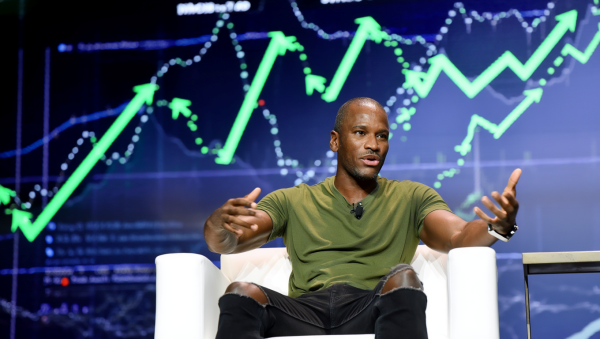
Arthur Hayes (아서 헤이즈), a co-founder of BitMEX, rejected criticism that his social media posts act as “exit liquidity” for followers. He said disclosing cryptocurrency investment positions should not be interpreted as soliciting investment and that all investment decisions must be made under each individual’s responsibility.
On June 17 local time, cryptocurrency outlet Decrypt reported that Hayes said on X, formerly Twitter, that he neither manages other people’s funds nor provides investment advice. He said he has never instructed anyone to buy or sell a particular cryptocurrency and stressed that his posts are limited to sharing his personal investment activity and market outlook.
The controversy was raised by ZachXBT (잭XBT), an on-chain analyst known as a whistleblower within the cryptocurrency industry. ZachXBT criticised Hayes, saying Hayes actively mentioned certain tokens such as Zcash (ZEC), Near Protocol (NEAR) and Hyperliquid (HYPE) on X in the past and then sold his holdings, effectively pushing losses onto followers.
He publicly singled out Hayes in recent days, asking how much exit liquidity Hayes had created from followers. Exit liquidity refers to a situation in which large investors or influencers use buying by retail investors to sell assets they hold.
Hayes countered that whether to agree with his views is entirely readers’ choice and that investors should do their own research and make independent judgments. He also asked critics to find examples of when and to whom he directly instructed to buy or sell a specific asset.
Hayes also acknowledged that his market predictions are often wrong. He said about 70 to 90 percent of his past forecasts ultimately missed the mark. He added that investment performance depends not on hit rate but on capital allocation. He said he puts more capital into ideas he has high conviction in and keeps limited exposure to trades he has less confidence in, generating profits that way.
He added that his investment strategy is structured so that a few successful positions offset losses from many failed investments.
In the market, there are also comments that while Hayes’ argument has some merit, his influence gives his posts an effect beyond a simple investment record. Hayes currently has more than about 800,000 followers on X and has consistently disclosed the cryptocurrency positions he holds and his market outlook.
He has actively shared buy and sell views on various altcoins such as Zcash, HYPE, Near and Worldcoin (WLD), and he has often directly informed followers when he liquidated positions after becoming less confident in certain projects. Critics argue that such disclosures themselves can act as signals to the market.
Alongside the controversy, Hayes’ recent investment moves are again drawing attention. After selling about 1,900 ether last year, he increased the weight of DeFi-related tokens, but recently he has been buying ether again.
On-chain data show that Hayes bought an additional 1,400 ether on June 16, and a total of 4,400 ether is now held in that wallet. The current valuation is estimated at about $7.78 million.
The market sees the core issue in the dispute as not simply Hayes’ trades, but the impact that position disclosures by influential investors can have on other investors. With remarks by major influencers able to affect market prices, debate is expected to continue over how to draw the line between personal opinion and what effectively becomes an investment signal. Hayes, however, is maintaining his position that his posts are not investment solicitation but merely a record of investment activity.
 Jinju Hong
hongjj@d-today.co.kr
Jinju Hong
hongjj@d-today.co.kr