
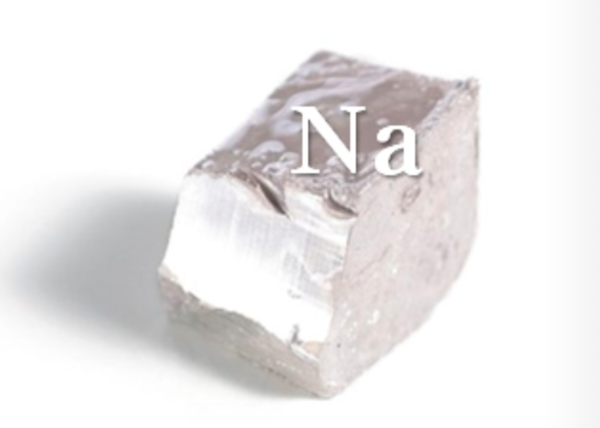
[DigitalToday reporter Seok Dae-geon (석대건)] As China unveils battery safety standards that are hard to clear with existing lithium-ion technology, sodium-ion batteries (SIB) are emerging as an alternative that can pass them. Solid-state batteries also offer high safety, but their mass-production timeline is still some way off. That has created a scenario in which faster-to-commercialise sodium-ion batteries open the market first.
With China’s electric-vehicle battery safety standard GB 38031-2025 taking effect in July, the battery industry is expected to move sharply again. The core requirement is that even if thermal runaway occurs, no fire or explosion must actually happen. That differs from the previous standard, which only required warning signals during thermal runaway. The standard, set by China’s Ministry of Industry and Information Technology, also tightened the thermal propagation test. Flames must not spread outside, and smoke must not have harmful effects on occupants. Batteries must also pass tests for impact durability on the underside, a short-circuit test after 300 fast charges, and thermal stability assessments at cell, module and pack levels.
The industry assessment is that meeting requirements at that level is not easy with lithium-ion technology alone. The battery industry says there is a view it is effectively a level that requires solid-state-grade safety to pass. The standard is already in force, but solid-state batteries capable of clearing it head-on are not yet on the market. Looking at mass-production targets for solid-state batteries by South Korea’s three battery cell makers, Samsung SDI aims for the second half of 2026 to 2027, while LG Energy Solution and SK On target 2029.
Sodium-ion batteries are moving into the gap between stricter standards and solid-state mass production. They can be produced by converting lithium-ion facilities, allowing faster commercialisation, and they have a lower fire risk. They retain 92 percent of initial capacity even at minus 20 degrees Celsius, and cycle life figures presented include 10,000 cycles for BYD and 15,000 cycles for CATL’s TENER sodium. Despite these strengths, their energy density of 160 to 175 Wh/kg falls short of lithium-ion.
For that reason, they are likely to be applied first to low-priced, small electric vehicles rather than high-performance premium models. An example is Changan Auto’s Nevo A06, developed with CATL and set for release in mid-2026. The same strengths matter more in energy storage systems (ESS). ESS does not need energy density as high as EVs do, and price, safety and lifespan are key, matching sodium-ion batteries.
According to SNE Research, sodium-ion battery demand will rise 70-fold over 10 years, from 3.6 GWh in 2025 to as much as 254.5 GWh in 2035. Its share of the ESS market is forecast at 13.4 percent in 2030 and as high as 35 percent in 2035. In value terms, that is about $14.2 billion a year, or about 20 trillion won. SNE Research analysed that sodium-ion batteries are highly competitive because ESS is a market where requirements for high energy density are lower than for EVs and where price, safety and lifespan are central.
◆ Sodium-ion battery demand to reach 254.5 GWh in 2035, up 70-fold in 10 years
As regulation-driven spillover effects open the sodium-ion battery market, China is leading again. CATL signed a 2 GWh supply contract with Eastern Europe’s Solapro in July. Transport standards were also revised in line with the tougher rules. Dedicated numbers such as UN 3551, 3552 and 3558 were newly created, and from Jan. 1, 2026, a rule limiting state of charge (SoC) to 30 percent or less applies for air transport under technical instructions from the International Civil Aviation Organization (ICAO) and the International Air Transport Association (IATA).
China is also leading the setting of international standards. In October last year, the International Electrotechnical Commission’s (IEC) Technical Committee on Secondary Cells and Batteries (TC21) unanimously approved a new international standard proposal for 12V sodium-ion batteries for automotive start-stop use at a meeting in Wuhan, China, led by Chinese companies, with all 17 P-member countries voting in favour. It is currently at the working draft (WD) stage, with a goal of submitting a committee draft (CD) in the second half of 2026 and publishing in 2028. The International Organization for Standardization (ISO) also discussed ISO/WD 25769 at a Tianjin meeting in January this year. That is why the second half of the year is being cited as a turning point for standardisation.
As rules and standards solidify from China, the response pace among South Korea’s three battery makers is diverging. LG Energy Solution will begin building a pilot line and producing samples in 2026, aiming for commercialisation before 2030. Samsung SDI said it plans to apply lithium iron phosphate (LFP) and sodium batteries, along with nickel-cobalt-manganese batteries, to ESS. SK On said sodium batteries are at an early research and development stage, and it is focusing on securing share in South Korea’s central contract market for ESS by emphasising LFP cost competitiveness.
Materials issues also weigh on the slower response. Sodium ions are larger than lithium, requiring hard carbon anode material instead of existing graphite, and localisation remains a task along with sodium cathode materials. SNE Research analysed that the supply chain and manufacturing capabilities are already formed around China. An industry official said, "What matters is not the technology itself but how much you participate in the standardisation process, and at this pace a structure could solidify in which we follow the specifications China makes."
 Seok Dae-geon
d2dg@d-today.co.kr
Seok Dae-geon
d2dg@d-today.co.kr