
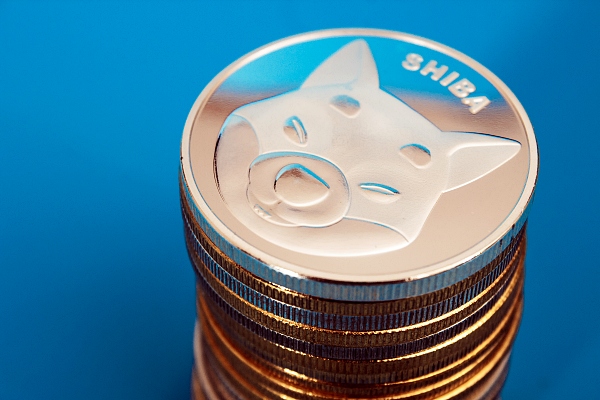
Shiba Inu (SHIB) holders’ actual selling has slowed noticeably, data showed. Despite continued price weakness, the amount moving to exchanges has dropped sharply, prompting analysis that investors are staying on the sidelines.
Blockchain news outlet U.Today reported on Tuesday that recent on-chain data showed the number of Shiba Inu exchange deposit addresses stayed around 7 on a moving-average basis.
Exchange deposit addresses are generally used as an indicator of how many investors are moving assets to exchanges to sell tokens. The figure is a moving-average value rather than the number of actual wallets, but it shows the number of unique addresses sending Shiba Inu to exchanges is very small.
That is interpreted as meaning selling pressure is not large even in a recent bear market. Actual exchange inflows also fell sharply. Over the past 24 hours, Shiba Inu exchange inflows were tallied as down more than 69 percent. With fewer tokens moving to exchanges, the likelihood of short-term selling also declines.
Network activity, however, does not appear to have contracted completely. The number of active addresses, active sending addresses and active receiving addresses rose slightly. That suggests participation is being maintained but is not translating into actual selling.
The price trend is still hard to see as a full-fledged recovery phase. Shiba Inu is attempting a rebound after its upward structure broke amid a downtrend that has continued for months. The price has recovered somewhat from a recent low near $0.0000045, and the relative strength index (RSI) has moved out of oversold territory. That suggests selling pressure is easing somewhat in the short term.
From a technical perspective, challenges remain. Shiba Inu is currently below its 50-day and 100-day moving averages, and both indicators continue to slope downward.
The market views the area near $0.0000055, a former support level, as the first major resistance zone. It is difficult to conclude a medium-term trend reversal until that level is regained, according to the assessment.
A notable point in this on-chain data is the gap between price moves and investor behavior. In general, when a prolonged bear market persists, investors often increase exchange deposits to dispose of their holdings. But even though Shiba Inu’s price has fallen for months, exchange inflows and the number of deposit addresses have instead decreased. U.Today analyzed it by saying: "A long-term bear market usually comes with an increase in exchange deposits, but Shiba Inu holders are showing a relatively passive stance toward selling."
If this trend continues, it could also change the supply-demand structure. If exchange inflows decline and steady demand is maintained, the effect could be a gradual reduction in circulating supply in the market.
Still, a decline in selling pressure does not immediately mean a strong bull market. Critics say additional confirmation signals are needed to determine the market’s direction, such as breaking through key resistance levels and a rise in trading volume.
In the end, the current Shiba Inu market is interpreted as having a lower selling burden than the price chart suggests. The likelihood of panic selling has declined, but whether the trend is turning should be judged after key resistance levels are regained.
 Jinju Hong
hongjj@d-today.co.kr
Jinju Hong
hongjj@d-today.co.kr