
[Digital Today reporter Jin-ho Lee] South Korea and Italy will expand science and technology cooperation centred on three key areas, including artificial intelligence (AI), climate change and bio.
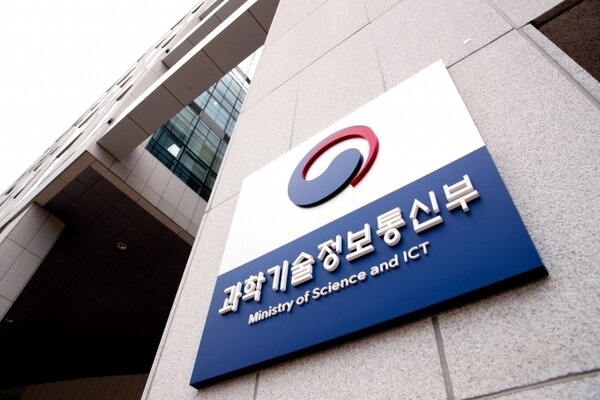
South Korea's Ministry of Science and ICT said on June 12 that it held the 13th Korea-Italy Joint Committee on Science and Technology in Rome on June 11 local time, jointly with Italy's Ministry of Foreign Affairs and International Cooperation.
The Korea-Italy joint committee is an official intergovernmental consultative body operated under a bilateral science and technology cooperation agreement signed in 1984. This meeting was held for the first time in 5 years since the 12th meeting, which took place online in 2021 due to the impact of COVID-19. It was the first face-to-face meeting between the two countries' head delegations in 9 years since the 11th meeting in 2017.
The two countries have pursued joint research based on a science and technology cooperation implementation plan on a three-year cycle. They also participated together in 15 projects under the multilateral research programme Horizon Europe.
The meeting was attended by Hwang Seong-hoon (황성훈), director general for international cooperation at the ministry, as head of the South Korean delegation, and Filippo La Rosa (필리포 라 로사), deputy director general of the public and cultural diplomacy bureau at Italy's Ministry of Foreign Affairs and International Cooperation, as head of the Italian delegation, as well as officials and researchers from the science and technology fields of both countries.
First, the two countries shared results from a joint bio research project completed last year, titled "Establishment of a plant-derived extracellular vesicle-based biotechnology platform." Through the study, researchers from the two countries established standard technology to precisely isolate and analyse extracellular vesicles, a natural drug delivery vehicle extracted from plants.
They also checked the status of a chemistry and eco-friendly research project titled "Azetidine synthesis using a sustainable photocatalytic system." A photocatalyst is a substance that absorbs light to increase the speed of a chemical reaction. Azetidine is a four-membered ring compound containing a nitrogen atom, and is used to increase medicinal activity in the process of developing new drugs.
They also discussed future cooperation agendas. In the AI field, the Electronics and Telecommunications Research Institute (ETRI) proposed possible cooperation between the two countries centred on embodied intelligence, neuromorphic, and chiplet heterogeneous integration technologies, which are key semiconductor technologies for physical AI. In the climate change field, the Korea Research Institute of Bioscience and Biotechnology shared research results on genome-based flowering time control technology and the development of crops responding to changes in climate environments. The research is being advanced through close communication with the University of Padua in Italy.
In addition, the Korea Brain Research Institute and the University of Bologna in Italy discussed ways to expand research cooperation spanning the entire cycle from identifying mechanisms of onset of brain diseases to developing therapeutics. The two sides will also step up working-level talks on plans to establish an international joint research centre to sustain cooperation in a stable manner. The 14th Korea-Italy Joint Committee on Science and Technology is scheduled to be held in Seoul.
Hwang said trust and science and technology capabilities between South Korea and Italy, which have carried out joint research tasks, are extending to the multilateral joint research arena of Horizon Europe. He said the two countries will combine their strong technological capabilities to establish themselves as leading countries in global science and technology.
 Jin-ho Lee
jhlee26@d-today.co.kr
Jin-ho Lee
jhlee26@d-today.co.kr