
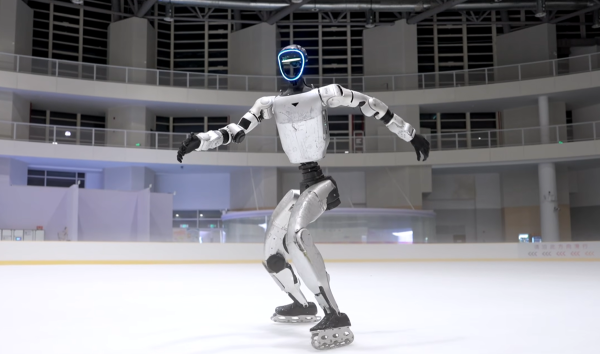
Chinese humanoid robot company Unitree has passed a key review procedure for an initial public offering in Shanghai.
On June 1, the South China Morning Post reported that Unitree passed a listing committee review for the Shanghai STAR Market, allowing it to move to the registration and issuance stage.
Hangzhou-based Unitree applied to list on the STAR Market on March 20. It later went through two rounds of regulatory questions and on-site inspections. The approval is expected to accelerate its IPO process. Unitree plans to offer at least 40.4 million shares to raise 4.2 billion yuan. That is equivalent to at least a 10 percent stake.
The progress comes as listing competition intensifies across China's humanoid robot sector. Dobot, already listed in Hong Kong, is pursuing a secondary listing on Shenzhen's ChiNext board. Leju Robotics and Deep Robotics are also moving through procedures for listings in Shenzhen and Shanghai, respectively. Sheng Zhong, head of China industrials research at Morgan Stanley, said, "A wave of humanoid IPOs will lift market interest in robot stocks."
Unitree is seen as a symbolically important company in the sector in terms of performance. Last year's revenue was 1.7 billion yuan, short of Hong Kong-listed UBTECH's 2.0 billion yuan, but its net profit was 590.8 million yuan, the highest among competitors. Profitability swung sharply in the first quarter of this year. A prospectus updated in May showed first-quarter revenue rose 68 percent from a year earlier to 422.8 million yuan, but adjusted net profit excluding one-off items fell more than 52 percent to 40.3 million yuan.
Unitree cited rising research and development and selling expenses as reasons for slowing profitability. It also said the cooling of overheated expectations for humanoid robots had an impact. The company therefore plans to invest half of the IPO proceeds in developing AI-based models for robots. The prospectus says it will use funds to develop World-Model-Action (WMA) and Vision-Language-Action (VLA) based models.
The models focus on improving the precision of robot movements and the ability to understand commands. World-Model-Action helps a robot predict physical environmental responses before it moves. Vision-Language-Action links visual information and spoken and written commands to actual actions. Unitree's decision to allocate a substantial portion of the offering proceeds to upgrading AI brains rather than expanding production highlights how Chinese humanoid companies plan to use funds.
The competitive landscape is also intensifying. Unitree said in its prospectus that Tesla's Optimus project and market entry by Chinese automakers and consumer electronics companies pose competitive risks. Sheng said IPO funding for Chinese humanoid robot companies is generally expected to focus on R&D, especially robot-based models, with relatively less allocated to expanding production capacity, and that the current priority is commercialisation and increasing shipments. He added that expanding capacity and mass production by system integrators would support demand for components, and said that was positive for Chinese supply chain companies.
The market sees 2026 as a turning point for the humanoid robot industry. UBS forecast global humanoid robot shipments would reach 30,000 units this year. Still, some say it is too early to conclude when the industry will shift to full-scale commercialisation because industrial deployment remains at the testing stage. UBS China industrials analyst Phyllis Wang said, "A lack of AI brains and data remains a major bottleneck," and "meaningful mass production requires breakthroughs in both areas." Against this backdrop, Unitree's listing push is seen as a signal that Chinese humanoid robot companies have begun to compete in earnest to secure funding for technology development and production expansion.
 Jinju Hong
hongjj@d-today.co.kr
Jinju Hong
hongjj@d-today.co.kr