
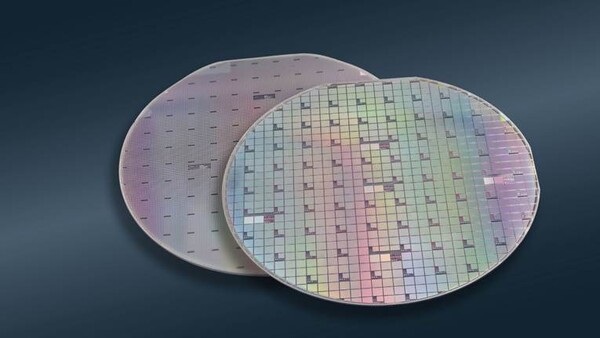
South Korean-made weapons are setting successive export records in global markets, but defense semiconductors that serve as the “brain” of those weapons depend in effect on imports for virtually all supply, prompting criticism that structural vulnerabilities lie behind the boom in K-defense.
A report titled “Study report on legislative measures to foster the defense semiconductor industry” by the Defense Acquisition Program Administration showed 98.9 percent of advanced semiconductors installed in domestic weapon systems are imported. Reliance on foreign products for defense power semiconductors and memory semiconductors reached 99.5 percent and 98.8 percent, respectively. Gallium nitride (GaN) semiconductors, a core component in radar and communications systems, were also found to rely entirely on overseas foundries for manufacturing.
The biggest reason localization of defense semiconductors has been slow is economics. Most defense semiconductors are produced through small-lot, custom manufacturing, making it difficult to cut unit costs through mass production as in the civilian market. A U.S. Department of Commerce report said the global defense semiconductor market was worth about 20 trillion won as of 2023, but perceptions have hardened that the market is small and uneconomic due to its multi-product, small-lot production characteristics.
South Korea’s industrial structure also played a role. Exports of finished platforms such as the K9 self-propelled howitzer, the K2 tank and the KF-21 are active, but a finished-product-centered structure has taken hold in which the parts and components industry has high dependence on overseas sources. Even if weapons sell well, the chips inside are bought from elsewhere. Constraints in technology and infrastructure are also significant. Compound semiconductors such as GaN and silicon carbide (SiC) differ from existing silicon processes and require separate equipment and security systems, but South Korea lacks sufficient infrastructure to handle them. Major domestic foundries supplying parts to Hanwha Systems and LIG Nex1 are also unable to operate dedicated defense-only lines separately.
The problem is that this import dependence does not stop at the supply-chain level. Hidden pathways in the chips themselves, or hardware backdoors, are being cited as a security threat. Warnings have been raised that some chips and equipment produced overseas may have backdoors deliberately embedded during the design and manufacturing stages, allowing manufacturers to collect and transmit data or remotely control functions using specific signals. If such functions are incorporated into weapon systems, it leads to concerns that an opposing country could activate a kill switch during conflict and disable weapons.
There is also the problem that it cannot be blocked by network separation alone. The United States, through the Federal Acquisition Regulation (FAR), defines semiconductors as essential to the economy and national security and directly mentions the possibility that hostile forces could insert hardware backdoors and malicious firmware in the production process. It has put forward a rule to restrict federal procurement of semiconductors equipped with China-made hardware.
◆Triple security risk: backdoor and kill-switch fears, plus China closing the gap
The industry stresses that unless the origin of parts, embedded functions and communication interfaces are verified in advance from the stage before equipment is brought into the field, it is difficult to control threats through post-incident responses alone. In South Korea, however, it is hard to find cases where technology to analyze security vulnerabilities at the hardware level has been made concrete, and only some proof-of-concept research is under way.
China’s advances add to the risks. Major Chinese semiconductor companies are accelerating efforts to upgrade technology for SiC and GaN power semiconductors directly tied to military use, with a goal of reaching 80 percent self-sufficiency by 2030. The problem is that GaN is the weakest link in South Korea’s defense semiconductors. As long as radar and communications GaN semiconductors depend entirely on overseas sources, the more supply tilts toward China, the more South Korea’s defense industry is exposed to the structural risk of entrusting the brains of its weapons to a potential competitor.
There are efforts to localize production. The Korea Institute for Advancement of Technology is set to pursue four projects through 2029, including space semiconductors for small satellites, semiconductor chips for SAR on unmanned aerial vehicles and semiconductor chips for AESA radars. All are localization projects based on compound semiconductors.
There have been no mass-production results yet, and as demand for defense semiconductors rises, the time defense companies need to secure semiconductors has lengthened from 6 months in the past to 1 to 2 years now. Semiconductors have served South Korea as diplomatic and security leverage, but there are concerns they could become an Achilles’ heel in the defense sector. An industry official said, “Compound semiconductors require separate equipment and security systems, so barriers to entry are high,” adding, “Economic logic is important, but investment at the national level is also needed.”
 Dae-geon Seok
d2dg@d-today.co.kr
Dae-geon Seok
d2dg@d-today.co.kr