
[DigitalToday reporter Lee Ho-jung] As Korean game companies’ push into PC and consoles translates into sales gains, their approach to global markets is changing. Mobile MMORPGs and live-service, domestic-focused revenue models once dominated. Recently, production and distribution have shifted more clearly toward overseas studio acquisitions, long-term development on proprietary engines and Steam-led package sales.
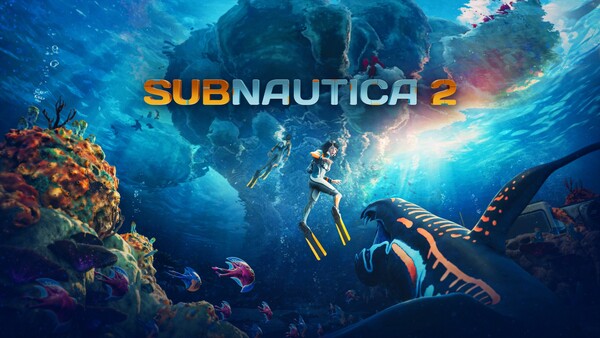
On June 1, the industry said Krafton unit Unknown Worlds’ ocean survival adventure Subnautica 2 topped 4 million in cumulative global sales within 5 days of its May 15 early access release. It also recorded a peak of 467,000 concurrent users on Steam and 1.3 million daily average active users.
Pearl Abyss’ open-world action adventure Crimson Desert sold 5 million copies in 26 days after its March release, marking the fastest sales pace in the history of Korean console games. Nexon subsidiary Embark Studios’ extraction shooter Arc Raiders has sold 16 million copies cumulatively since its release in October last year, extending its long-running popularity.
Earlier cases support the view that the latest results are not an exceptional case tied to a specific company. Neowiz’s Lies of P (more than 4 million copies), Shift Up’s Stellar Blade (more than 6 million copies) and Nexon Mintrocket’s Dave the Diver (more than 8 million copies) have already shown K-games’ global competitiveness on PC and consoles.
The industry does not view the trend as a simple platform expansion. It is an analysis that investment methods and development strategies have fundamentally changed. An industry official said, "This success was not made suddenly. It is the result of moving away from a mobile-dependent structure over several years and changing production methods themselves to target global users."
Nexon and Krafton chose to buy global development capabilities directly. Nexon invested more than hundreds of billions of won in Sweden’s Embark Studios in 2018 to 2019 and made it a wholly owned subsidiary. Arc Raiders won 5 awards at global ceremonies such as The Game Awards and the BAFTA Awards, and added 4.6 million copies in the first quarter alone, leading Nexon to its biggest quarterly results on record. Riding the success, Nexon also made an unusual personnel move by appointing Embark Studios CEO Patrick Soderlund (패트릭 쇠더룬드) as chairman of Nexon’s Japan unit.
Krafton acquired Unknown Worlds, the studio behind the Subnautica series, for $500 million in 2021, or about 580 billion won at the time. Since then, as Subnautica 2 has become a hit, expectations have grown that it can broaden an intellectual property portfolio concentrated on Battlegrounds.
Pearl Abyss is a case of pushing ahead without outside investment. Crimson Desert has been developed over 7 years since 2019 on its proprietary BlackSpace Engine. The game faced a flood of harsh criticism early after release over controls and narrative, but developers responded quickly with multiple updates, leading to an unusual turnaround in which overseas game outlets raised review scores. Overseas sales accounted for 94% of Crimson Desert revenue, translating global market performance into results. Pearl Abyss’ first-quarter operating profit rose 2,584.8% from a year earlier to 212.1 billion won.
The next moves of companies that delivered results are also taking shape. Krafton is developing Project Windless, based on author Lee Young-do (이영도)'s novel The Bird That Drinks Tears, through collaboration between its Canadian subsidiary and developers in South Korea. Nexon subsidiary Nexon Games is preparing Woochi the Wayfarer, based on the tale of Jeon Woo-chi, while Neowiz and Shift Up have each started work on sequels to existing IP.
Still, challenges are substantial. As Korean game companies make a full-scale entry into the global AAA market, the burden of development costs is also growing. Prominent game journalist Jason Schreier pointed out that development costs at North American AAA studios have jumped to more than $300 million, or about 450 billion won. Former PlayStation chief Shawn Layden also warned of structural limits, saying, "The AAA game industry has become a kind of cathedral business."
After a hit, the burden of continuous updates to retain users is also a different order of demand than past mobile services. The Crimson Desert case shows that responding to the Steam community is now an essential condition on par with development capabilities. It remains unproven whether initial success can be linked to a repeatable IP system.
Another official said, "It is clear that Korean game companies are learning the rules of the global package market after years of trial and error." The official added, "For a one-off hit to lead to structural competitiveness, the key will ultimately be how quickly and consistently they can produce follow-up IP."
 Lee Ho-jung
lhj@d-today.co.kr
Lee Ho-jung
lhj@d-today.co.kr