
[DigitalToday reporter Ji-young Lee (이지영)] The savings bank sector posted 333.8 billion won in net profit in the first quarter, sustaining its profitable trend. Profitability improved on cleanup of bad property project financing (PF) and easing provisioning burdens. Still, supplies of mid-rate loans to mid- and low-credit borrowers fell by more than 1 trillion won from a year earlier, prompting criticism that the sector's key role in providing finance for ordinary people is weakening. Attention is also on whether a "livelihood stability fund" loan for mid- and low-credit borrowers that financial authorities plan to launch next month can provide a breakthrough for the shrinking market.
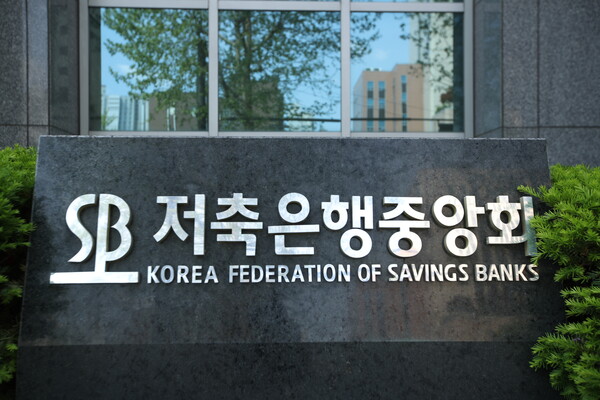
As of May 29, net profit at savings banks nationwide was 333.8 billion won in the first quarter, up 289.8 billion won from 44.0 billion won a year earlier, the Korea Federation of Savings Banks said. The improvement followed a return to annual profit last year and extended into this year.
An easing in provisioning burdens is cited as a key driver of the profitability improvement. Loan-loss provision expenses were 801.8 billion won in the first quarter, down 104.0 billion won from a year earlier. The federation attributed the decline to a reduced need for additional provisions as PF cleanup and the sale and write-off of bad loans progressed. Non-interest profit and loss also rose sharply to 294.4 billion won from a year earlier.
Some operating indicators also showed signs of recovery. Total loans stood at 95 trillion won as of end-March, up 1.5 trillion won from the previous quarter. Corporate loans in particular rose 1.9 trillion won to 48.1 trillion won, leading the increase. With funding demand from small and medium-sized firms partly recovering, savings bank lending is seen as having returned to growth.
Capital soundness also remained at a solid level. The Bank for International Settlements (BIS) capital ratio was 16.0 percent, up 0.1 percentage point from the previous quarter. The liquidity ratio was 170.8 percent, far above the statutory requirement. The federation said management stability was being maintained on record-high capital adequacy and stable liquidity.
Still, the burden on asset quality has not been fully resolved. The delinquency rate rose 0.7 percentage point from the previous quarter to 6.7 percent, and the ratio of substandard or worse loans climbed to 8.6 percent. With the economic recovery slower than expected and repayment burdens persisting for the self-employed and small firms, the risk of deterioration remains, the report said.
Shrinking finance for ordinary people; can a "livelihood stability fund" loan be a breakthrough?
In particular, voices in and outside the industry are raising concerns about shrinking supplies of mid-rate loans, separate from the recovery in profitability. Savings banks have traditionally served as a channel for providing finance to mid- and low-credit borrowers and small merchants, but related lending has been falling rapidly in recent years.
Private-sector mid-rate loan originations totalled 1.7235 trillion won in the first quarter, down 1.0232 trillion won from a year earlier, the federation said. The number of savings banks offering mid-rate loans fell and the average loan size also shrank.
The decline is attributed to tighter household loan regulations introduced last year. With borrower-specific limits on unsecured credit loans restricted to within annual income, the market for mid-rate unsecured credit loans that savings banks can supply has sharply contracted, the report said.
Against this backdrop, a livelihood stability fund loan for mid- and low-credit borrowers that financial authorities are pushing to launch next month is emerging as a new variable. The product is designed to provide up to 10 million won to borrowers in the bottom 50 percent by credit score. With authorities deciding to apply partial exemptions to existing credit-loan limit rules for funds intended for livelihood stability purposes, expectations are rising that the largely blocked market for unsecured credit loans to mid- and low-credit borrowers could partly recover.
The industry is also reviewing the possibility of launching related products. Still, some warn it remains to be seen whether this will translate into an actual expansion in supply given limits on loan caps and borrower requirements.
In particular, the savings bank industry may find it difficult to aggressively increase lending to mid- and low-credit borrowers, who face higher delinquency risk, as soundness management has emerged as the top priority after PF cleanup.
A savings bank industry official said, "For the time being, we expect a cautious management stance that places greater weight on soundness management while maintaining a profitable trend." The official added, "Still, as the government's policy to expand inclusive finance and a planned overhaul of the mid-rate loan system in the second half come together, the sector will continue to push its role in supplying finance to mid- and low-credit borrowers to enhance trust in the industry."
 Ji-young Lee
ljy@d-today.co.kr
Ji-young Lee
ljy@d-today.co.kr