
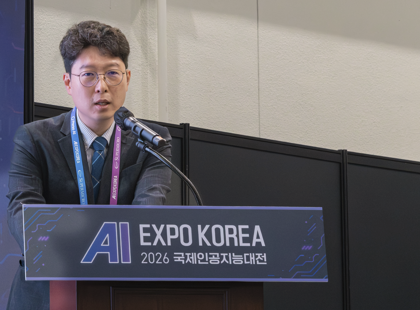
[Hyun-chul Kim (김현철), head of the Korea Artificial Intelligence Association] Last October's announcement that Nvidia would supply 260,000 GPUs to South Korea was cited as a diplomatic achievement for the goal of becoming one of the world's top three AI powers.
The disappointing part is that the supply is concentrated in large companies. The 50,000 units supplied to Samsung Electronics are for an in-house AI factory to optimise yields for HBM and foundry operations. Another 50,000 for Hyundai Motor are for autonomous driving simulation. SK's 50,000 are for its own AI factory. Naver Cloud's 60,000 are based on its cloud business.
The volume that can be allocated to academia, research institutes and startups as a national policy is about 20 percent of the total. A supplementary budget worth 1.46 trillion won first secured 13,136 GPUs, but the entities that actually purchase and operate them are Naver Cloud, NHN Cloud and Kakao, and the government leases the capacity. What is allocated to academia and research is also virtualised slices of the three companies' data centres. Each project is limited to a maximum of 12 months, and industry pays 5 to 10 percent of the market price out of pocket.
The H200 and B200 secured by the government are high-performance GPUs strong in training and large-scale general-purpose computing. The H200 SXM is rated at up to 700 watts, and the B200 line requires higher power and cooling infrastructure depending on system configuration. They are strong equipment for training massive models by bundling hundreds or thousands of units. It is clear that large GPU clusters are needed for massive model training and research at the national level. But it may not be easy to handle all AI demand in the same way.
The centre of gravity for AI workloads is rapidly moving to inference. As agents, vertical AI, physical AI and regionally managed AI increase, the core is shifting from ultra-large-scale training to low-latency, low-power inference.
There are limits to a method that pulls all data generated at hospitals, factories, ports, industrial complexes, schools and traffic control sites into a central location for processing. Judgments and responses must be made near the point of generation. Inference-only chips are already on the market, and FuriosaAI and Rebellions provide NPUs in South Korea. Adoption cases are also accumulating, centred on the LG AI Research Institute, KT Cloud and SK Data Center.
Of course, domestic NPUs still lack performance, generality and a software ecosystem compared with foreign GPUs and NPUs. Developer experience is also weak, and supported models and frameworks are limited. It is difficult to compete directly in large-scale training or general-purpose AI computing. That is precisely why policy design matters. Domestic NPUs cannot grow through protection and investment alone.
They must collide with real customers, real failures, real costs and real service-level agreements. Chips, drivers, compilers and ecosystems change only when they repeatedly meet field-based inference demand such as hospital image reading, factory anomaly detection, local government CCTV analysis, traffic control, civil complaint automation and school learning data processing.
In this situation, if the government supplies Nvidia GPUs in large volumes at 5 to 10 percent of the market price, startups will naturally choose them. The reason to experiment with domestic NPUs that are still lacking disappears. From the standpoint of domestic NPU companies, it becomes difficult to secure time to build competitiveness by competing in the market.
The Solarsido national AI computing centre project in Haenam, South Jeolla Province, which has already begun construction, is a large project with a total cost of 2.4065 trillion won. It will build 15,000 GPUs by 2028 and 50,000 by 2030 in phases. After two failed tenders, the public stake was lowered from 51 percent to less than 30 percent, and a clause requiring domestic NPUs was also removed.
The structure has made it strongly commercial infrastructure led by a large-company consortium. By contrast, the budget for micro data centre projects remains at 27.3 billion won. Compared with central infrastructure worth trillions of won, the policy weight is significantly smaller.
The government stresses sovereign AI, but under the current structure sovereign AI may not go beyond placing Nvidia chips on South Korean territory. True data sovereignty operates on a different level. Manufacturing process data in regions, medical imaging data at local medical institutions, local government CCTV, school learning data and industrial complex equipment data must be processed at the point of generation.
A combination of idle public assets, advanced mobility infrastructure and distributed inference hubs could be an alternative. Cumulative school closures nationwide have exceeded 4,000, and unused closed schools number in the hundreds. Aging industrial complexes increased to about 520 as of 2025. If hubs with access to power, communications and transport are selected among them, they can become candidates for regional AI infrastructure.
Closed schools and aging industrial complexes can reduce the cost of securing new sites by using existing public land and some basic infrastructure. Data centre-grade power, cooling and communications infrastructure would need separate reinforcement, but the starting point itself differs from building a large centre from scratch on empty land.
An urban air mobility vertiport can also be combined. A vertiport is a facility that creates low-latency AI demand such as real-time control, route optimisation, collision avoidance and detection of abnormal approaches, beyond a simple takeoff and landing site. If vertiports and distributed inference hubs are designed together, transport infrastructure and AI infrastructure can be built at the same time. If a hierarchy is designed with 5 to 10 megawatt hubs integrating vertiports, inference centres and startup colocation at the metropolitan city level, 1 to 3 megawatt hubs using closed schools and aging public land at the city, county and district level, and 100 kilowatt container nodes using libraries and annex space at district offices at the neighbourhood level, central hyperscale and regional inference hubs complement each other.
If domestic NPUs are placed first in distributed inference hubs, two markets open at the same time. Regions can process their own data in their own areas, and domestic AI semiconductor companies gain real demand. If they are excluded because domestic NPU performance is insufficient, they will remain insufficient forever, and if unverified technology is used unconditionally, the field is harmed. The answer lies in between. Regional inference hubs should be designed as real-world proving grounds for domestic NPUs. In the early stage, GPUs and NPUs should be deployed together. Performance, power and cost by workload should be compared openly, assigning areas they do well first and quickly improving areas they lack. Industry is hard to grow through protection alone, but it cannot grow even more without opportunity.
Closed schools fall under the Education Ministry and local education offices, aging industrial complexes under the Industry Ministry, vertiports under the Land Ministry, data centres under the Ministry of Science and ICT, and balanced development under the Interior Ministry. Projects involving six ministries hardly move forward in South Korea's administrative structure. That is also why the micro data centre budget was cut to 27.3 billion won. With extremely limited staffing at the Ministry of Science and ICT, it is difficult for the central government to plan and execute distributed infrastructure across dozens of regions at the same time. The central government can set a broad direction and budgets, but binding regional sites, power, permits and industrial demand into one is outside central authority.
That is why the role of candidates in the June 3 local elections is important. What the next local governments must do goes beyond announcing pledges. They must bundle idle assets and industrial demand in their regions and propose them back to the central government. That is because only local government heads have certain powers. First is ownership and management rights over idle assets. Using closed schools requires cooperation between superintendents and local government heads, and local governments must act on regeneration sites in aging industrial complexes and annex spaces at public libraries and district offices. The central government has no way to create local sites. Second is the authority to integrate demand. Only local governments can bundle hospital, school, industrial complex, traffic control and administrative data in a region into one AI workload, and infrastructure is created only when demand is gathered, and companies gather only when infrastructure exists. Third is the legitimacy to form a consortium. Only when an SPV combining local governments, regional universities, regional hospitals, industrial complexes, private colocation operators and domestic NPU companies emerges as an applicant to a central government tender does the project take shape.
There is analysis that the concentration of commercial data centres in Seoul and the metropolitan area is very high, and concentration in the capital region is also clear even by the standards of total data centres and power demand. Regions have remained as objects under the slogan of balanced development, but this term could go differently. There must be local government heads who directly design an 'AI distributed infrastructure package' by bundling sites for closed schools, regeneration plans for aging industrial complexes, candidate vertiport locations and data from regional hospitals and manufacturers. The authority to combine sites, power, permits and industrial demand at the same time lies in that position.
It is not realistic to handle all AI demand with a focus on large GPUs. It is true that domestic NPUs are still lacking, but if they are pushed out of the real market because they are lacking, they can never catch up. The technology gap does not shrink only in laboratories. It shrinks in the market, by meeting customers, experiencing failures, cutting costs, proving power efficiency and building an ecosystem that is easy for developers to use.
Central hyperscale infrastructure is clearly needed, and large GPU clusters are necessary for massive model training and research at the national level. But industry does not grow with that alone. Inference hubs must be laid across regions, and real-world tracks must be created there for domestic NPUs to collide with the market. GPUs and NPUs should be deployed together, performance, power and cost by workload should be compared, and an initial market should be opened through public demand. The closest authority that can draw that picture lies in the hands of the next local government heads.
 Hyun-chul Kim
delight@d-today.co.kr
Hyun-chul Kim
delight@d-today.co.kr