
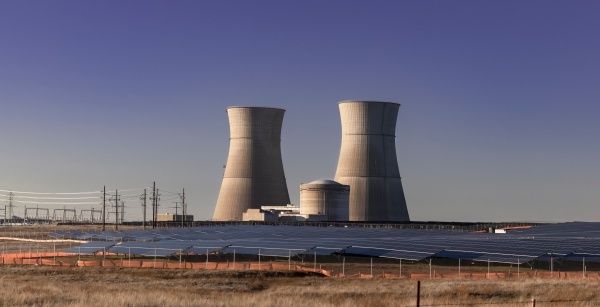
The U.S. government is pursuing a plan to use some plutonium that has been in long-term storage and designated for disposal as fuel for next-generation reactors.
On May 26 local time, TechCrunch and other major foreign media reported that the U.S. Department of Energy selected five nuclear power startups to negotiate with the government over how to use plutonium.
The selected companies are Oklo, Standard Nuclear, Shine Technologies, Flibe Energy and Exodys Energy. The Energy Department previously confirmed about 34 tonnes of plutonium classified for disposal, and some of it has been raised as a possible fuel for next-generation reactors.
The move is linked to a plutonium disposal problem the United States has faced for decades. The United States produced about 100 tonnes of plutonium for nuclear weapons during the Cold War. As nuclear stockpiles were dismantled, the material has been stored for long periods in high-security facilities. Plutonium also exists in nature, but it is generally produced by irradiating uranium with neutrons. Some plutonium isotopes used in nuclear weapons have a half-life of about 24,000 years, and concerns have persisted that storage alone makes long-term resolution difficult.
The selected startups are reviewing plutonium use in different ways. Oklo is developing a reactor that can use plutonium together with conventional uranium fuel. Securing plutonium could also help address Oklo's fuel needs for initial reactor operations, according to assessments.
Exodys Energy is pursuing a reactor based on mixed oxide, or MOX, fuel that mixes uranium and plutonium, while Flibe Energy is developing a next-generation reactor that uses plutonium together with fission byproducts as fuel. The industry is also paying attention to the possibility that the project could be tied to fostering the next-generation nuclear power industry, beyond simply handling waste.
Some have also raised the possibility of conflict-of-interest controversy in the policy push. U.S. Energy Secretary Chris Wright previously served as an Oklo board member but resigned when he joined the administration and said he also disposed of his stake. Sam Altman (샘 알트먼), OpenAI's chief executive officer, also served as board chairman after his special purpose acquisition company, AltC, merged with Oklo, but stepped down from the post last year.
Security concerns remain a key variable. The plutonium was originally material for nuclear weapons, meaning tight controls are needed in handling and transport. Scott Roecker (스콧 로커), vice president for Nuclear Threat Initiative, said in a New York Times interview, "Many countries have tried in the past to use plutonium fuel, but ultimately reached the conclusion that permanent disposal is necessary."
The fuel supply chain also remains a variable. MOX fuel is currently produced mostly in France. The United States previously pushed to build its own production facility in South Carolina, but the project was halted during the first Trump administration due to rising costs and schedule delays. Oklo partner Britain's Newcleo has said it plans to build its own MOX fuel production facility.
As a result, the key going forward is expected to hinge on detailed negotiations over actual supply terms and security systems. The five startups will enter advanced talks with the government focused on plutonium transport and security management measures. Whether the United States can link its long-stored nuclear material problem to the next-generation reactor industry to resolve it, and whether it can overcome both safety and security concerns at the same time, are emerging as key points to watch.
 Jinju Hong
hongjj@d-today.co.kr
Jinju Hong
hongjj@d-today.co.kr