
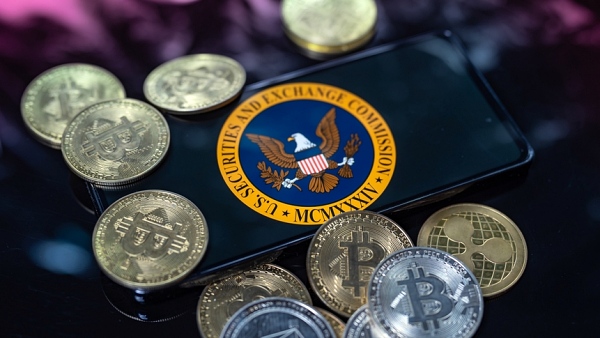
The U.S. Securities and Exchange Commission has delayed releasing a so-called Innovation Exemption plan to allow tokenised stock trading. The move is seen as the regulator slowing its pace after the industry raised concerns over approvals from listed companies and methods to verify ownership.
Cointelegraph, a blockchain media outlet, reported on Sunday that the SEC decided to push back its timetable for releasing the proposal, which would allow tokenised shares to trade on crypto-based platforms.
The core of the plan is to allow share trading on blockchain-based platforms while ensuring investor rights are protected in the same way as traditional securities. Platform operators would need to meet a condition requiring them to provide token holders with the same rights as existing shareholders, including dividends and voting rights.
Practical concerns were raised during the design process, the report said. The biggest issue is the possibility that third parties could issue tokens linked to a specific company's stock without the listed company's consent. The industry has warned that allowing such a structure could disrupt the existing order of securities markets.
The blockchain's pseudonymous structure was also cited as a problem. A key task has been how to verify who actually holds tokens and whether the holder is qualified to exercise shareholder rights.
The SEC is reported to have received views from hundreds of market participants on how the plan would be applied. It is also reported to have delayed the announcement to adjust details rather than reverse regulatory direction. A draft had already completed much of its internal review, but entered additional review at a stage just before release.
Some in the industry viewed the delay positively. Carlos Domingo (카를로스 도밍고), chief executive of tokenisation platform Securitize, said it was important to ensure the exemption is applied to appropriate products.
Tom Farley (톰 팔리), chief executive of crypto exchange Bullish, also referred to the issue of third parties that are not listed companies issuing tokens representing stock stakes. He said delaying and fixing it properly was the right move.
The move is also linked to a shift in tone within the SEC. Hester Peirce (헤스터 피어스), an SEC commissioner known as a prominent pro-crypto figure, said on May 24 the exemption would be "limited in scope". She suggested it may allow only a "digital representation" of equity securities similar to what investors can currently trade on secondary markets. That is seen as closer to a direction that recognises tokenised stocks in a limited way within the existing regulatory framework rather than allowing them broadly.
Criteria for distinguishing tokenised securities have also been partly laid out. The SEC in January classified tokenised securities into "custodial" and "synthetic" types. Custodial tokenised securities involve the issuer directly and a regulated intermediary holding the asset, providing full shareholder rights. Synthetic tokenised securities track only price movements without holding the actual shares. The industry believes the SEC is likely to allow the custodial structure first in future regulation.
The discussions also intersect with broader shifts in U.S. crypto policy. Since the launch of the Trump administration, the SEC has taken a relatively open stance toward crypto-based financial products, and Wall Street has been rapidly expanding its interest in tokenisation and stablecoin markets.
Some say actual market adoption is slower than expected. RWA.xyz data puts the current market size for tokenised real-world assets at about $34 billion, with tokenised stocks at about $1.55 billion. Citibank and McKinsey have projected the tokenisation market could grow to several trillion dollars by 2030, but institutionalisation and market uptake are slower than forecast.
Market participants see the key variable for expanding the tokenised stock market as how clearly the SEC sets out the scope of approvals from listed companies, eligibility of issuers, methods to guarantee shareholder rights and a framework for verifying ownership.
 Jinju Hong
hongjj@d-today.co.kr
Jinju Hong
hongjj@d-today.co.kr