
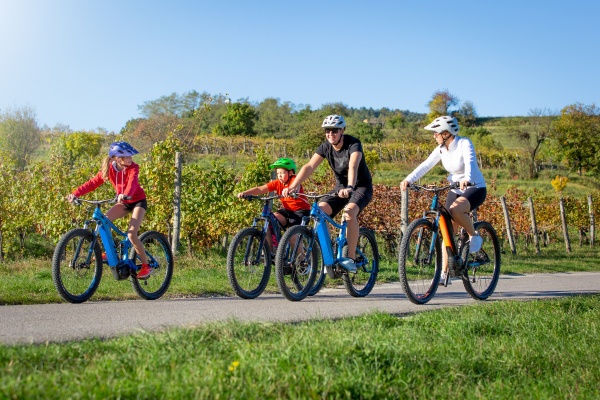
A claim has emerged that U.S. households should accept electric bicycles not merely as a recreational means of getting around but as an essential form of daily transport that can replace cars. With the burden of car ownership costs rising, e-bikes are establishing themselves as a practical alternative for short-distance travel, the analysis said.
On May 18 local time, electric vehicle-focused outlet Electrek reported that a significant share of short car trips by U.S. households is increasingly replaceable with e-bikes. It said e-bikes are becoming more efficient for short trips handled by a second vehicle, such as commuting, school runs for children, grocery shopping and errands.
Behind this is a surge in car ownership costs. U.S. households face combined burdens including fuel, insurance, maintenance, registration, parking and financing costs. By contrast, e-bikes are cited as having the advantage of meeting everyday travel needs with relatively low upkeep costs.
The outlet said, "E-bikes won't replace every car trip, but they can replace far more trips than you might think." It said newly released e-bikes have seen major improvements in speed, stability and carrying capacity, and cargo models support grocery shopping and carrying children. It also highlighted that some products can be purchased for a cost comparable to a few months of car ownership expenses.
The potential for changes in how households get around is also drawing attention. It said U.S. parents often end up acting as full-time drivers when children begin school and sports activities and take part-time jobs. But if safe cycling conditions and e-bikes are in place, teenagers can travel on their own to school, friends' homes, libraries and shops.
The outlet described this as "a healthy mobility independence step before driving a car." Cargo e-bikes in particular were introduced as a means that can partly replace roles previously filled by sport utility vehicles (SUVs), including accompanying children on school runs and grocery shopping.
Use among older people is also expanding. Pedal-assist features ease hill riding, reduce strain on knees and help address declining stamina, and there has recently been an increase in electric tricycles for riders who have difficulty maintaining balance. This could help older people sustain outdoor activities and short-distance travel for longer, the analysis said.
Benefits are also expected in terms of urban transport. If e-bike use increases, it could help reduce road congestion, parking burdens and noise, it said. The outlet said, "The most efficient form of transport for short trips might not be a car," adding that e-bikes are efficient for short-distance travel because they can depart directly from home and park close to the destination.
Health benefits were also cited as a key advantage. E-bikes can naturally increase physical activity in the course of everyday travel without setting aside separate time to exercise. It also positively assessed that they have lowered barriers to cycling such as hills, sweat and physical strain.
The outlet said the key ultimately lies in a shift in perception. If e-bikes take their place in the household garage, people ask again, "Do I really need a car for this trip?" It said that process could change household spending, travel habits and even how communities connect.
It also noted that in some European and Asian countries, e-bikes have already become an everyday form of transport. The industry is also voicing expectations that if the United States begins moving away from a car-centered mobility structure, growth in the e-bike market could accelerate further.
 Jinju Hong (홍진주)
hongjj@d-today.co.kr
Jinju Hong (홍진주)
hongjj@d-today.co.kr