
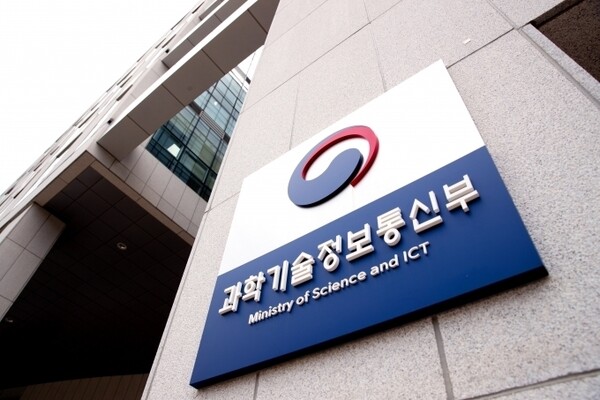
South Korea's Ministry of Science and ICT on Tuesday visited POSCO DX's Pangyo office and AI chipmaker DeepX to check on-site use of on-device AI semiconductors and hold a corporate meeting.
The inspection follows visits last month to SK Telecom and LG AI Research as part of efforts to check the use of domestically developed on-device AI semiconductors. The AI chips being used at the sites are commercialised outcomes of projects supported through the ministry's research and development and pilot programmes.
POSCO DX's Pangyo office uses Mobilint's AI semiconductor in PosMaster, an industrial control system developed in-house by POSCO DX. Mobilint has raised investment of about 3 billion won through a corporate venture capital fund jointly set up by POSCO DX and POSCO Technology Investment, and is expected to continue to identify and create diverse private-sector demand.
DeepX began mass production of its on-device AI semiconductor, DX-M1, in August last year. It has since signed contracts worth a total of $9 million in 8 countries including South Korea. It demonstrated an ultra-low-power AI semiconductor in which butter does not melt even while it is operating, and won an innovation award at CES 2026, the world's largest consumer electronics and IT exhibition, this year.
At a meeting between supplier and user companies held after the inspection, participants shared the status and plans for AI semiconductor use by company. The ministry heard policy needs and suggestions to expand domestically developed on-device AI semiconductors. It also discussed response directions for the government and companies as demand is expected to rise for low-latency and low-power on-device AI semiconductors amid the growth of physical AI and agentic AI.
Lee Do-gyu (이도규), director general for ICT policy at the Ministry of Science and ICT, said the inspection confirmed the strong competitiveness and significant potential of domestically developed AI semiconductors. He said the ministry will actively support domestic AI semiconductors so they can secure global competitiveness in the era of physical AI and agentic AI, which he said will see full-scale growth.
 Jin-ho Lee
jhlee26@d-today.co.kr
Jin-ho Lee
jhlee26@d-today.co.kr