
[DigitalToday Kyung-min Hong (홍경민), intern reporter] Apple is said to be preparing a large slate of next-generation product categories across six fields beyond its existing device lineup, targeting the artificial intelligence (AI) and smart home markets.
On April 23 (local time), IT outlet 9to5Mac cited Bloomberg's Mark Gurman and introduced a list of major new product lines Apple is currently developing. The disclosed information is being interpreted as not merely adding new products, but as a strategic shift as Apple seeks to expand beyond an iPhone-centric structure to an AI-based hardware ecosystem.
The lineup includes hardware in entirely new areas Apple has not previously entered, such as wearable devices packed with AI technology and home robot systems. The industry is viewing this as a sign that Apple is trying to diversify its next growth engines.
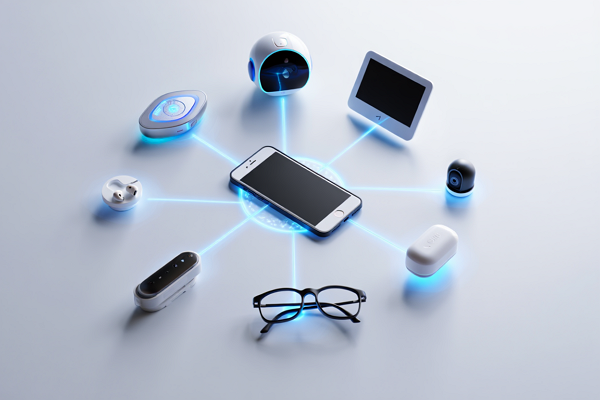
The newly disclosed product categories total six: AI AirPods, smart glasses, a pendant-style wearable, a smart display (home pad), a tabletop robot and a security camera. Of these, AI AirPods are closer to an expansion of functions in the existing lineup, while the other five products fall into new hardware categories Apple is entering for the first time.
Smart glasses and the pendant-style wearable are cited as key pillars of the strategy. The two devices are being developed as next-generation interface devices that closely link with the iPhone and use AI functions such as Siri to provide real-time information and assistance in users' daily lives. The goal is to move away from smartphone-centered input methods and create a more natural, always-on environment for accessing AI.
Expansion of the smart home ecosystem also appears to be getting under way in earnest. The smart display known as a home pad is being discussed as possibly being introduced as early as this fall alongside the iPhone 18 unveiling event, and a home security camera is expected to be released within the year. Both products combine the privacy-centered design Apple has emphasized with AI functions, and are expected to seek differentiation from the existing home IoT market.
The tabletop robot, by contrast, is classified as the longest-term project. The product's initial target launch date is set for 2027, but the possibility has also been raised that it could be delayed to 2028 depending on the difficulty of technology development and the level of completeness. The robot aims to serve not as a simple device but as an advanced personal assistant combining AI and mechanical engineering.
For smart glasses, the possibility of an announcement in late this year or early 2027 has been mentioned, but an actual market launch in 2027 is said to be likely. The pendant-style wearable is a new type of AI device that could serve as an alternative to AirPods or smart glasses, and is viewed as a product line that redefines the way it is used.
In this way, the six categories Apple is preparing are meaningful in that they represent a strategic shift aimed at moving away from an iPhone-centered structure, rather than a simple product expansion. In particular, the three wearable products and smart home devices will take on the role of redesigning the user experience across Apple's ecosystem based on linkage with the iPhone.
The industry views the roadmap as a strategy for Apple to target not only high-spec mixed reality devices such as Vision Pro, but also the everyday AI device market at the same time. In other words, it is being interpreted as an effort to gradually broaden user touchpoints through a two-track strategy that runs high-performance devices and lightweight AI devices in parallel.
 Kyung-min Hong (홍경민)
hongm@d-today.co.kr
Kyung-min Hong (홍경민)
hongm@d-today.co.kr