
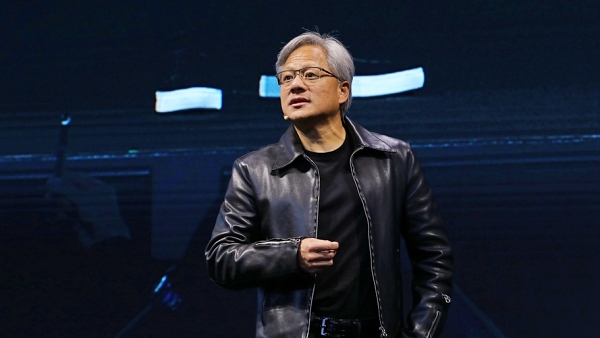
Nvidia CEO Jensen Huang (젠슨 황) said concerns that artificial intelligence will replace skilled roles should distinguish between a job’s tasks and its purpose.
On April 22 local time, IT outlet TechRadar reported that Huang said on stage at Adobe’s annual event, Summit 2026, that demand for radiologists did not decline after AI was introduced.
Huang said that when early uses of AI emerged in medical imaging interpretation more than 10 years ago, there were widespread worries inside and outside the medical community that AI could replace jobs as it showed “superhuman” performance in image analysis. But the actual outcome was the opposite. Radiologists saw more patients than before, and the number of people working in the field increased compared with before AI was introduced.
He said, “We need to separate the tasks of work from the purpose of a profession.” AI can replace human labour at the task level, but it also enables workers to focus more on their original purpose, he said.
In radiology, much of the image-reading work has been automated, but diagnosing and managing disease with clinicians and patients remains human-centred. As speed and accuracy rose and costs fell, more tests were conducted, expanding demand across the job overall. He added that these changes also led to positive effects for medical services.
Huang said not all jobs follow the same path. The impact of AI depends on whether demand can grow for the purpose the job serves and whether human judgement remains central, he said. He also acknowledged that roles made up of repetitive, heavily administrative work can still be at risk.
His remarks led to the view that AI is closer to reducing constraints that block work than to fully replacing human skills. Using the radiologist example, Huang emphasised that automation does not automatically lead to fewer jobs and outcomes can vary depending on job design and demand structure.
Against this backdrop, Huang’s comments again highlighted that discussions on adopting AI should go beyond whether it replaces workers and examine which tasks are automated and which judgement remains with humans. In particular, for skilled professions, even if parts of the work are automated, the profession’s “core purpose” can be maintained, and if service demand rises, the employment structure can be reshaped in a different direction, he said.
His remarks focused on the point that even if AI automates individual tasks, it does not replace an entire job in the same way. He cited the case as an example that in areas such as healthcare, where human judgement and collaboration remain, adopting AI can lead to higher productivity and rising demand.
 Yoonseo Lee
yslee@d-today.co.kr
Yoonseo Lee
yslee@d-today.co.kr