
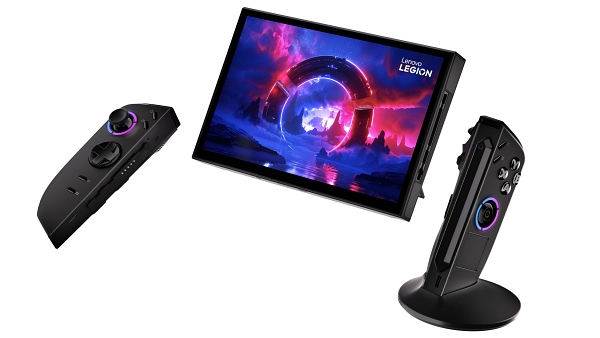
[DigitalToday reporter Jinju Hong (홍진주)] Lenovo’s handheld game console Legion Go 2 2TB model has jumped to $2,850 (about 4.22 million won). The price of the Windows-based handheld has surpassed the $1,998 (about 2.96 million won) cost of two Nvidia RTX 5080 Founders Edition cards.
TechRadar, citing Notebookcheck, reported on April 13 that the Legion Go 2 Ryzen Z2 Extreme 2TB model listed on Lenovo’s online store is priced at $2,850. That is a sharp increase from its previous retail price of $1,480 (about 2.19 million won). The 1TB model was also reported to have risen as high as $2,000 (about 2.96 million won), making it more expensive than its previous $1,350 (about 2.00 million won) price.
With the increase, the 2TB model is not only more expensive than two Nvidia RTX 5080s, but has also entered a higher price range than a single RTX 5090, which is being mentioned as the current top-end desktop graphics card. It amounts to a price reversal between handheld consoles and key desktop components.
The market is citing recent instability in memory supply and demand as a direct backdrop. The outlet said, “RAM prices have been edging down recently, and there was a trend toward calming the confusion somewhat, but the confusion is not over yet and Lenovo showed that.” Lenovo has not yet explained the reason for the price increase.
Still, judging by the current trend, it is clear the memory crisis continues to affect the broader PC hardware market. The outlet said of the pricing, “Saying handheld game consoles are absurdly priced is not enough,” and it assessed the 1TB model reaching $2,000 as a level consumers would find hard to accept.
The price burden stands out even more compared with competing products. The outlet said handheld game consoles such as the GPD Win 5 sell for less than the Legion Go 2 2TB model while featuring an AMD Ryzen AI Max+ 395 and offering gaming-laptop-class performance. It added that at this price range, gamers would struggle to find a reason to choose the Legion Go 2.
The issue is that it is uncertain whether the increase will be a one-off. If memory price instability continues to push up not only some parts but also finished product prices, the price competitiveness of the high-performance handheld gaming market could be further shaken.
 Jinju Hong
hongjj@d-today.co.kr
Jinju Hong
hongjj@d-today.co.kr