
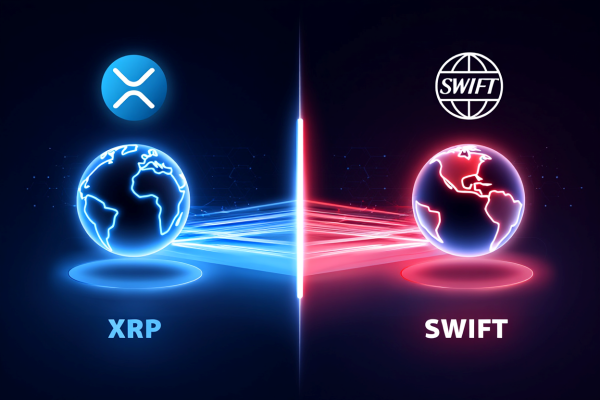
[Digital Today reporter Yoonseo Lee] Japanese financial institutions said an XRP-based cross-border remittance pilot confirmed costs up to 60 percent lower than those of the Society for Worldwide Interbank Financial Telecommunication (SWIFT) and settlement speeds within 4 seconds.
The Crypto Basic, a blockchain outlet, reported on April 11 that the results were unveiled at the 'XRP Tokyo 2026' event held earlier this month. The test was conducted on an actual remittance corridor connecting Japan and Southeast Asia.
The pilot centred on Ripple's payment service. The system bypasses the correspondent banking structure used by SWIFT, converts fiat currency into XRP, sends it via the XRP Ledger (XRPL) and then converts it back into local currency. Participating banks said they cut costs by reducing accounts that tie up funds in advance and by cutting the number of intermediaries.
Participating banks said transaction costs fell by up to 60 percent as the burden of intermediaries and idle capital was reduced. Settlement time was also shortened to seconds from the typical 1 to 5 business days under the SWIFT system. The network was reported to have completed transactions within 4 seconds.
Ripple said at the event it added 12 new currency pairs targeting remittance demand in Southeast Asia. Officials from Mitsubishi UFJ Financial Group and regional central bank authorities also assessed the system on site.
SBI Holdings, which has worked with Ripple for a long time, was again mentioned as a key pillar for expansion in Japan. SBI Holdings has cooperated with Ripple since 2016, and in 2023 it launched a real-time XRP remittance service between Japan and the Philippines. It recently also introduced a 10 billion yen blockchain bond that pays returns in XRP. It was introduced as the first such case in Japan's financial sector.
By its transaction structure, remittances through Ripple's payment network involve buying and selling XRP for each transfer. If the 12 newly added payment corridors move into actual operation, XRP trading flows could also become steadier. XRP is currently traded on 20 platforms approved by the Japan Virtual and Crypto Assets Exchange Association (JVCEA) and is considered one of the cryptocurrencies with the broadest support in Japan.
Ripple plans to launch the stablecoin RLUSD through SBI's exchange. Under the structure, RLUSD handles payments while XRP continues to serve as a bridge asset connecting trading liquidity. A potential shift in the U.S. regulatory environment was also mentioned as possibly speeding up institutions' adoption of XRP-based systems.
The results are seen as a test bed for whether XRP can be used in real financial infrastructure beyond being a speculative asset. With specific figures presented in Japanese banking trials showing a cost and speed advantage over SWIFT, whether the remittance network in Asia expands has emerged as the next point to watch.
 Yoonseo Lee
yslee@d-today.co.kr
Yoonseo Lee
yslee@d-today.co.kr