
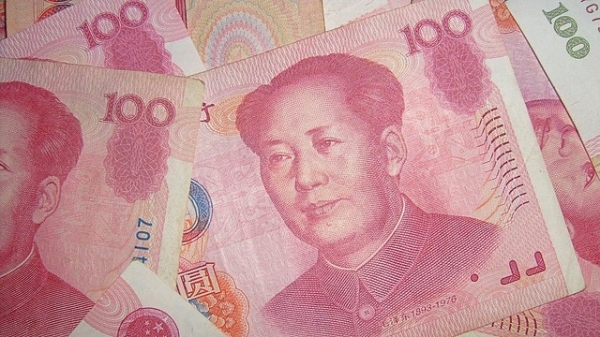
Harvard University economist Kenneth Rogoff (케네스 로고프) said China’s yuan could rise to become a major reserve currency within the next five years. He said cracks are forming in the dollar-centred international monetary order, and China’s policy direction and market conditions are increasing the chance of a shift.
On April 5 local time, blockchain outlet BeInCrypto reported that Rogoff cited President Xi Jinping’s drive to internationalise the yuan as a key variable behind the outlook. He said China’s leadership has set expanding the yuan’s global use as a clear policy goal, moving beyond a simple economic trend to a strategic push.
The international environment is also becoming more favourable to China. Rogoff said a clearer move has emerged among global investors to reduce dependence on the dollar and diversify assets. He said geopolitical risks and the possibility of financial sanctions are combining to heighten wariness of a dollar-dominant system. In this 흐름, the yuan is drawing attention as one alternative currency.
Rogoff also made clear that reserve-currency status cannot be secured through political declarations alone. He stressed that China needs to open its government bond market further to improve access for overseas investors. He said trading infrastructure, liquidity and derivatives markets must support the yuan if yuan-denominated assets are to become an attractive option for international investors. He also presented expanding financial instruments global investors can use, such as FX forwards and interest rate swaps, as a necessary condition.
He said full capital-market opening does not necessarily need to come first. Rogoff said the United States also maintained certain restrictions on foreign investment until the 1970s, but the dollar retained its dominant reserve-currency status during that period. He said this implies a certain level of internationalisation is possible even if China maintains a gradual opening strategy.
On payment infrastructure, he cited reducing reliance on existing international financial networks as a key task. Rogoff stressed the need to build an independent payment network that moves away from a SWIFT-centred structure. He said blockchain technology could replace existing systems at lower cost, and that China’s Cross-Border Interbank Payment System, known as CIPS, could serve as the foundation.
He assessed cryptocurrencies as a secondary variable. Rogoff estimated that the global underground economy is at least $20 trillion, and said cryptocurrencies, including stablecoins, are expanding their role to some extent in that area.
He drew a line, however, saying this is largely limited to informal economies and will not reach a level that replaces the dollar in the legal financial system. He cited governments’ ample regulatory authority to block it. He also criticised the U.S. Genius Act as making stablecoin regulation overly lax, and said regulation is likely to come to resemble requirements at the level of central bank digital currencies, citing that tracking is difficult once coins leave the issuer.
Ultimately, the yuan’s rise to reserve-currency status will likely be determined by a mix of variables, including policy commitment, financial-market opening, payment infrastructure and the global investment environment. Rogoff’s outlook suggests that even if the dollar-centred order does not collapse in the short term, cracks have already begun.
 Jinju Hong
hongjj@d-today.co.kr
Jinju Hong
hongjj@d-today.co.kr