
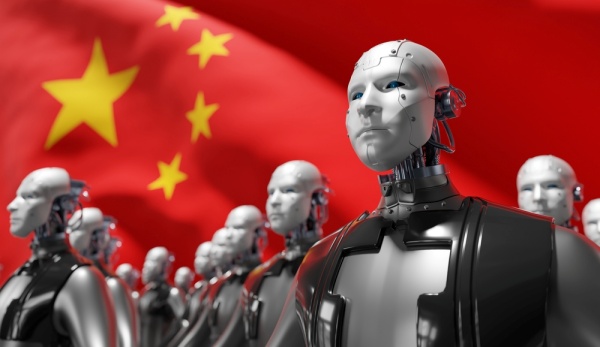
One of the themes that drew attention at CES 2026, an IT exhibition held in January, was the fusion of AI and humanoid robots. Leading U.S. companies, from semiconductor makers to automakers, raced to roll out humanoid robot technologies.
Nvidia unveiled a new vision-language model, Gr00t, that enables robots to control their bodies using sensor inputs. AMD and Qualcomm also revealed new robot-related technologies. AMD worked with Italian company Generative Bionics to introduce the industrial robot Gene.01, while Qualcomm released a robot-only chip called Dragonwing.
At this point, it may look as if U.S. companies will lead the humanoid robot market. But the picture changes when it comes to the parts ecosystem and manufacturing inside humanoid robots. Chinese companies already have a strong position.
A recent Wall Street Journal report said the United States controls key technologies such as advanced chips and robot “brains,” but China has secured an edge in the manufacturing ecosystem for humanoid robot bodies.
Nvidia CEO Jensen Huang (젠슨 황) also appeared on a podcast in March and said, "China is the best in the world in microelectronics, motors, rare earths and magnets that form the foundation for robots." He added, "The global robot industry will have to depend heavily on China."
In Tesla's case, it is even forming a team in China to work with suppliers for its Optimus humanoid robot. Tesla employees are visiting Chinese parts makers for sensors, motors and other components as part of preparations for mass production of Optimus, targeted for November, the WSJ reported, citing sources familiar with the matter.
Tesla is trying to develop many parts in-house. The WSJ reported that this could optimise compatibility between hardware and software and lead to greater control over technology, but ultimately means relying on Chinese companies that can supply customised parts at reasonable prices.
China has previously viewed the humanoid robot supply chain as a strategically important area and has taken dramatic steps at the government level.
In 2023, it said it would build a resilient domestic supply chain by 2027 to reduce risks from external shocks and to move away from dependence on countries such as Japan and Germany, which have expertise in robot parts. In February, it also announced national standards for the first time covering core technologies and parts overall.
With advanced parts available domestically, China's makers of completed humanoid robots have gained the capability to enter the market faster, according to the assessment. Morgan Stanley said Chinese companies introduced 28 humanoid models last year, nearly three times as many as U.S. companies.
Unitree, a major Chinese manufacturer of humanoid robots and parts, shipped more than 5,500 humanoid robots last year for uses including research, education and general performances. Unitree aims to list on the Shanghai stock market this year and raise $610 million. In its IPO filing, the company stressed, "With mass production, our bargaining power with parts suppliers is growing stronger, and we are continuing a cost advantage."
China's humanoid supply chain is more formidable on price as well. Morgan Stanley estimated that manufacturing costs for humanoid robots could be cut by up to two-thirds through China's supply chain. Market research firm TrendForce said components that control humanoid robot movement, including dedicated motors and gears, account for about 55 percent of a robot's total cost.
With U.S. robot companies still holding an edge in access to semiconductors and other U.S. AI technologies, Chinese companies are accelerating efforts to target the parts market, the WSJ reported. It said they are also actively participating in overseas exhibitions and recruiting local distributors in places such as Japan and Singapore.
 Chi-gyu Hwang
delight@d-today.co.kr
Chi-gyu Hwang
delight@d-today.co.kr