
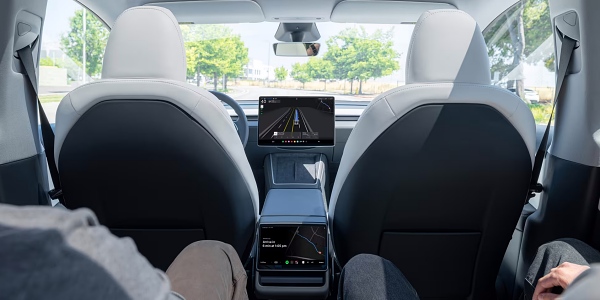
Tesla is expected to unveil its robotaxi service to general customers within two weeks and is pushing a plan to include 70 percent of the U.S. population within its service coverage.
On April 2 (local time), electric-vehicle outlet CleanTechnica reported that Tesla has been preparing a large-scale launch since starting a robotaxi pilot service last year.
Tesla is currently operating the service in 15 to 20 major U.S. cities. The cities in operation include New York, Chicago, Los Angeles, Washington, D.C., Orlando, Miami, Tampa, Atlanta, Phoenix, Dallas, San Antonio, Houston, San Jose, San Francisco and San Diego. Based on that footprint, Tesla is expected to be preparing an expansion to a level that covers more than half of the U.S. population.
Users are expected to use the service by downloading the Tesla robotaxi app and hailing an autonomous vehicle. Model 3 and Model Y are expected to account for a larger share at the start, with the share of Cybercab and Cybervan gradually increasing over the following months. As production of those models rises, the share of dispatches will be adjusted accordingly.
Some point out that Elon Musk (일론 머스크), Tesla's chief executive, said in July last year that robotaxis would cover 50 percent of the U.S. population by the end of 2025, but ultimately failed to meet that goal. A plan to operate robotaxis in Austin, Texas, without human safety drivers was also delayed.
If the service expands as outlined, Tesla's robotaxi could move beyond a limited trial phase and enter a full commercialisation stage. A plan to widen the service footprint around major metropolitan areas can also be read as an effort to position an autonomous ride-hailing platform as one pillar of real transport infrastructure.
Market attention is likely to focus less on the timing of the unveiling than on operational stability and the pace of expansion. Because earlier rollout targets and schedules fell short of expectations, a key yardstick this time is how realistic the initial operating areas, vehicle operations and a shift to a service without safety drivers turn out to be.
 Yoonseo Lee
yslee@d-today.co.kr
Yoonseo Lee
yslee@d-today.co.kr