
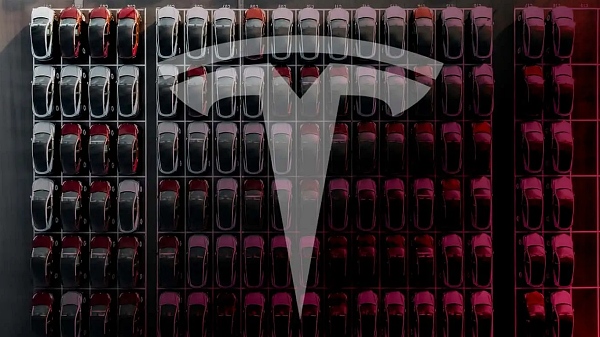
Tesla has struggled with weak sales since early 2026, fuelling talk of a crisis. Tesla has previously seen sales fall early in quarters, but some analysis says this drop is not a simple cyclical pattern. Tesla's January 2026 sales fell 23 percent in Europe and 45 percent in China, a weak start. Tesla is hoping for a rebound with new technologies such as robotaxis, but falling sales and rising AI costs are weighing on it.
• Tesla, is it really in crisis this time? • A Tesla investor's blunt warning: "Tesla should hand its EV business to Rivian"
Prominent investor Ross Gerber said the Tesla brand has become a negative asset and called for Tesla to sell its electric-vehicle business to Rivian. Rivian signalled a rebound as its shares surged on results that were stronger than expected. Tesla, meanwhile, has posted profit declines for a second straight year, heightening concerns.
• Tesla scraps lifetime FSD purchase option, shifts to subscription model • Tesla begins mass production of its robotaxi 'Cybercab' - will it open the door to autonomous driving? • Tesla robotaxis had 14 accidents over 9 months, 4 times riskier than human drivers
Tesla is removing the lifetime purchase option for FSD and allowing only a $99-a-month subscription. FSD has seen price changes since it was introduced in 2016, and the latest move is seen as a strategy to strengthen subscription-based revenue. Tesla has started producing the fully autonomous robotaxi 'Cybercab' at Gigafactory Texas. Cybercab is a two-seater with no steering wheel or pedals and runs on Tesla's Full Self-Driving (FSD) software.
Meanwhile, an additional accident has occurred in Tesla's robotaxi service operating in Austin, Texas, bringing the total number of confirmed accidents since the service began in June last year to 14. Allegations that Tesla covered up accidents have also been raised, spreading controversy over autonomous-driving safety.
• Tesla's large electric truck 'Semi' price? 400 million won range for the 800 km model • Tesla teams up with Tencent to integrate WeChat, applying it to 1,000,000 vehicles in China
Tesla's Semi 500-mile (about 800 km) long-range model has been pegged at $290,000 (about 420 million won). That is a 60 percent increase from the price announced when it was unveiled in 2017, but it remains competitive compared with the industry average. Additional discounts may be possible through California's HVIP subsidy and cooperation with Uber Freight.
Tesla is working with Tencent to apply WeChat connectivity to 1,000,000 vehicles in China. It is a move to strengthen localisation, including WeChat location sharing and AI-based service recommendations. With local competition from BYD and others intense, Tesla's response in the China market is in focus.
• Ford's fourth-quarter results fell, missing market expectations by 32 percent • Ford unveils universal EV platform, strengthens battery efficiency and price competitiveness • Honda's third-quarter net profit plunges 61 percent, hit by EV losses and U.S. tariffs
Ford posted a net loss of $8.1 billion for full-year 2025 and said an unexpected $900 million in tariff costs was a key reason for the deterioration. Its traditional internal combustion, commercial and EV businesses all struggled. Ford set aggressive targets for 2026, but improvements in EV losses remain uncertain.
Ford unveiled a new universal EV platform centred on mid-size electric pickup trucks. It said F1 aerodynamics, AI and 3D design and integrated power equipment improved battery efficiency and driving range while reducing cost and weight. It integrated more than 30 ECUs into five modules to improve efficiency and durability.
Honda said fiscal third-quarter profit fell 61 percent from a year earlier to 153.4 billion yen due to slowing EV demand and the impact of U.S. tariffs. The auto business swung to a loss due to one-off EV-related costs and tariff losses. Its motorcycle business supported results with high margins, and Honda began restructuring its North American EV operations.
• Pony.ai and Toyota aim to crack the China market with a China-Japan robotaxi joint venture • China's BYD and Geely target Nissan-Mercedes joint venture plant as they race to secure the North American market • BYD tops 4,600,000 vehicle sales in 2025, beating Ford
A robotaxi jointly developed by Pony.ai and Toyota has entered mass production in China. They will produce 1,000 units this year to operate in major Chinese cities, with a goal of expanding to 3,000 by 2026. As cooperation in autonomous-driving technology and EV manufacturing accelerates, China's robotaxi market is growing rapidly.
Chinese EV makers BYD and Geely have made the final shortlist to acquire a Nissan-Mercedes joint venture plant in Mexico. The plant can produce 230,000 vehicles a year and is seen as a bridgehead for entering North America. After difficulties building new plants, they shifted strategy to acquiring an existing facility.
BYD expanded its market presence by selling 4,600,000 vehicles last year. The industry has focused only on BYD surpassing Tesla's BEV sales volume, but analysis says an EV brand also outpacing traditional U.S. manufacturer Ford is another important milestone showing market trends.
• Africa, the next-generation EV market drawing global attention • Once you drive one, you can't go back - 96 percent of EV owners say they will buy an EV again
Africa is emerging as a next-generation EV market. Policy changes such as bans on importing internal combustion cars and operation of hydropower plants to expand power grids are accelerating the shift to EVs, and various global brands are investing to enter African markets. BYD is also pushing aggressive expansion with a goal of securing 70 dealerships within the year.
A JD Power survey showed 96 percent of EV owners intend to choose an EV for their next vehicle as well. The Tesla Model 3 ranked No. 1 in the premium segment, and the Ford Mustang Mach-E took the top spot in the mass market. Analysis said improved charging infrastructure and advances in battery technology boosted satisfaction.
• Kakao Mobility: "We will push aggressively for commercialisation of end-to-end autonomous driving" • TMAP Mobility expands content business, launches 'My Theme Course'
Kakao Mobility held a forum on the 12th together with lawmaker Jun-ho Jung (정준호) titled, "AI autonomous-driving demonstration city, from technology to service". Kakao Mobility CEO Keuk-sun Ryu (류긍선) said, "Based on real-time road data and platform operation know-how, we are pushing aggressively to build an end-to-end (E2E) autonomous-driving commercialisation pipeline."
TMAP Mobility is holding a user-participation event called 'My Theme Course'. It was designed to go beyond simple information recommendations and allow users to naturally show their tastes and memories. Users can share a single course built from personal travel experiences and stories, such as family trips or date routes. Selected courses will be introduced in the app as 'TMAP Theme Course' content.
• "The ultimate value-for-money king has arrived" - Honda launches an electric scooter in Japan in the 2 million won range • "Camouflage is off" - Royal Enfield's first electric bike 'Flying Flea C6' nears mass production
Honda is introducing its entry-level electric scooter 'ICON e:' to the Japanese market. The scooter uses a removable battery and can travel about 81 km. The price has been set at 220,000 yen (about 2.05 million won), including the battery and charger. Honda aims to expand the electric two-wheeler market with the model.
Royal Enfield's first electric motorcycle, the 'Flying Flea C6', is being tested without camouflage. Royal Enfield plans to launch a model combining classic design with modern electric technology in the first quarter of 2026. It aims for a real-world range of 150 km with a lithium iron phosphate (LFP) battery and belt drive.
• 'Basso Palta 3' unveiled with Italian sensibility, a new benchmark for gravel bikes • Bike theft worries over - the ultimate folding bike lock has arrived
Basso unveiled its new gravel bike, the Basso Palta 3. Speed, comfort and control have been significantly improved from the previous model, and it has ample carrying capacity, making it suitable for bikepacking. The base-spec complete bike starts at $5,995.
Hiplok unveiled a folding bicycle lock, the 'Switch 105', with a length of just under 1 metre. The product combines security and portability and can be carried in various ways, including on a belt, bag or bicycle frame. It weighs 1.17 kg, offers strong security and costs $129.
 Hyunwoo Choo
cookinpapa@d-today.co.kr
Hyunwoo Choo
cookinpapa@d-today.co.kr