
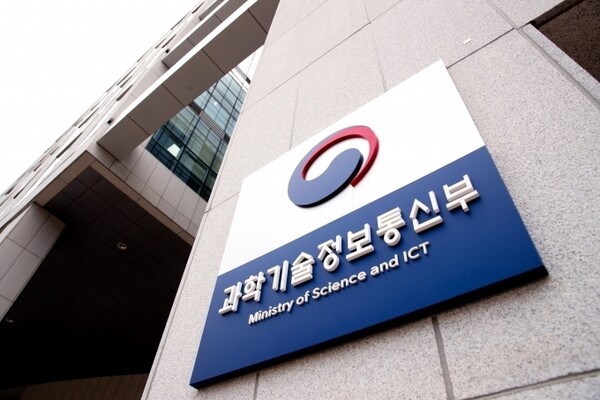
South Korea's Ministry of Science and ICT on Tuesday held the sixth meeting of science and technology-related ministers in writing and deliberated and approved a plan to select national artificial intelligence (AI) projects for nationwide AI innovation.
The national AI project provides government GPU resources by linking with projects run by each ministry to drive nationwide AI innovation. The ministry will support the national AI project with about 3,000 of the 10,000 government advanced graphics processing units (GPUs) secured through a 2025 supplementary budget.
A total of 121 tasks from 28 ministries were submitted after the government gathered cross-ministry demand. After an adjustment committee process that included expert evaluations, a screening committee and expert interviews for each task, the science ministers' meeting deliberated and approved 52 tasks from 25 ministries as this year's national AI projects.
Key tasks include transitioning to software-defined vehicles (SDV) and upgrading end-to-end (E2E) autonomous driving models for AI future cars (Ministry of Trade, Industry and Energy); an industry-specific foundation model project (Ministry of Science and ICT); a project to commercialise strategic technologies of innovative AI startups and accelerate AX (Ministry of SMEs and Startups); development of a Korean AI weather and climate foundation model (Korea Meteorological Administration); AI primary healthcare (Ministry of Health and Welfare); promoting production of AI convergence content (Ministry of Culture, Sports and Tourism); and development of measurement-based integrated prediction technology for operating Arctic sea routes (Ministry of Oceans and Fisheries).
The SDV transition and AI future car E2E autonomous driving model upgrade, which will receive support of 304 B200 units, will push to develop a general-purpose AI foundation model for autonomous driving that integrates the full process of perception, decision-making and control. It will also build a virtual training environment based on real road data. The industry-specific foundation model project, which will receive support of 256 B200 units, will pursue development of AI foundation models specialised for promising industries such as manufacturing and robots and mobility, where South Korea has strengths, and will push to open-source and spread them.
The project to commercialise strategic technologies of innovative AI startups and accelerate AX, which will receive support of 200 B200 units, will support development of AI models for strategic industries such as bio and energy, and link support for verification and commercialisation of the industrial applicability of research outcomes. It also plans to support development of domain-tailored AI solutions by opening large language models (LLMs) from large companies to AI startups.
It will also implement a prediction system spanning from very short-term precipitation forecasts to mid-term forecasts and seasonal outlooks through the development of a Korean AI weather and climate foundation model, which will receive support of 128 B200 units. AI primary healthcare, which will receive support of 80 B200 units, will apply AI across various medical fields such as voice-based clinical summary, assistance for image reading, and summarising and generating medical information exchange data. It will also build a centralised healthcare AX hub to provide AI-based medical services by hospital.
Promoting production of AI convergence content, which will receive support of 64 B200 units, focuses on applying AI across the stages of content planning, production, distribution and consumption. It will provide full-scale support for the content AX industry, including improving production efficiency through content production and verification and developing models suited to implementing K-content.
Development of measurement-based integrated prediction technology for operating Arctic sea routes, which will receive support of 64 B200 units, will analyse changes in Arctic sea ice and weather to establish benchmarks for safe and efficient route operations. It plans to secure an Arctic environment-optimised architecture and intensively train a "full-scale multimodal Arctic foundation model" integrating satellite observation data and climate models to advance integrated prediction technology.
The ministry will sequentially allocate advanced GPUs starting this month depending on the start timing of each national AI project task. Idle resources from tasks whose start dates are delayed will be supported by accepting short-term demand at all times from industry, academia and research institutes through the national AI computing resource support portal. The ministry plans to monitor usage monthly and retrieve and reallocate resources if use is insufficient versus plans, used for other purposes, or utilisation falls.
Science and ICT Minister and Deputy Prime Minister Bae Kyung-hoon (배경훈) said, "We will continue to identify AI innovation demand in the public and private sectors and do our utmost so that the GPU resources secured by the government can be allocated where they are needed."
 Jin-ho Lee
jhlee26@d-today.co.kr
Jin-ho Lee
jhlee26@d-today.co.kr