
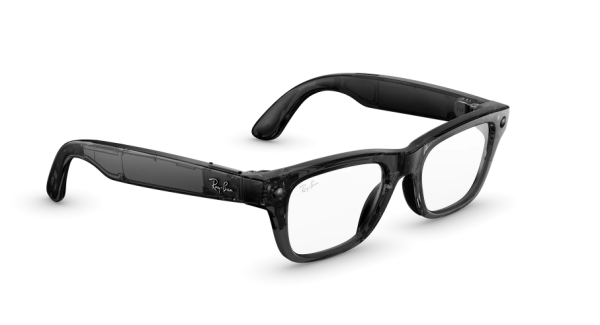
[DigitalToday reporter Jinju Hong] Meta unveiled two new Ray-Ban AI smart glasses frames targeting prescription eyewear users, stepping up efforts to expand everyday wear.
According to IT outlet TechRadar on March 31, the new models strengthen comfort and prescription compatibility, but have drawn assessments that the price range has risen further.
The newly added models are Blayzer and Scriber Optics. Meta stressed both are designed for all-day wear. It said the prescription lens support range has been expanded from -6 to +6 to meet most vision correction needs, including users with astigmatism.
Improving comfort is also a key change. The new models apply overextension hinges that reduce excessive spreading, replaceable nose pads and temple tips that can be adjusted at optical shops. They are designed to allow fine fitting to match face shapes, in what is seen as an effort to address discomfort issues raised about existing products. Meta introduced the models on that basis as its most comfortable AI glasses.
Prices, however, clearly show a premium strategy. The new frames start at $499 in the United States, and costs rise sharply when adding options such as prescription lenses and Transition lenses. TechRadar reported that with all options applied, the price could climb to as much as $1,024. Even a relatively simple configuration is priced at $599 to $799, an analysis said, raising the barrier to entry compared with the existing lineup.
There is also minor differentiation in the package contents. The new models come with a dark brown charging case different from the existing one, and it is used as a distinguishing factor within the lineup.
Meta is also making changes not only to Ray-Ban but to its Oakley smart glasses lineup. Oakley Meta Vanguards introduce Transition lenses for the first time, and add a black and rose gold lens option. Oakley HSTN also expanded choices to include dark golf lenses and clear-to-brown Transition lenses. This is seen as an attempt to move away from a sunglasses-centered structure and increase usability in various environments.
The core of the new products is wearability rather than an expansion of AI functions. Meta is seeking to establish smart glasses as eyewear worn every day by broadening prescription support and improving fit. Market reaction is in focus because the pricing structure, which can exceed $1,000 depending on options, could limit the pace of popularisation.
 Jinju Hong
hongjj@d-today.co.kr
Jinju Hong
hongjj@d-today.co.kr