
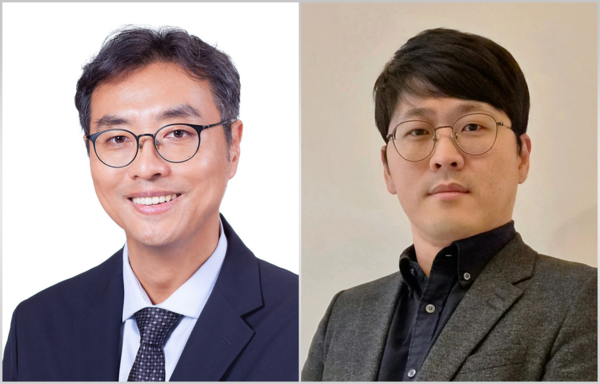
Samsung SDI has developed a technology that improves both the lifespan and safety of lithium metal batteries. Samsung SDI said on Sunday it developed an electrolyte composition that can improve lithium metal battery performance through industry-academia cooperation with Columbia University in the United States.
The research overcame limits of lithium metal batteries, which have high energy density but short lifespan. Lithium metal batteries are seen as a core technology for next-generation wearable devices, with energy density 1.6 times that of ternary batteries.
Their commercialisation has been constrained because the number of charge and discharge cycles has been limited to several dozen. The joint research team found a breakthrough by applying a "gel polymer electrolyte". The fluorine-based gel polymer electrolyte forms a stable interface on the anode surface. It effectively suppresses dendrites, a factor that degrades battery performance.
Dendrites are crystalline structures that form when lithium moving from the cathode to the anode during charging accumulates on the anode surface. They reduce battery life and safety. The industry assessed the research as presenting a new technical approach to improve the energy efficiency and safety of next-generation batteries.
A paper led by Samsung SDI's research institute was published in the latest issue of the energy journal "Joule". Co-authors include Samsung SDI research institute Vice President Seungwoo Lee (이승우) and Pro Hyunsik Woo (우현식), Samsung SDI Research America head Yongseok Kim (김용석) and Pros Li Yang and Yuan Yuan Ma, and Columbia University Professor Yuan Yang.
Yongrak Joo (주용락), head of Samsung SDI's research institute, said, "This paper is significant in that the technology improving the safety of lithium metal batteries, previously cited as a weakness, has been academically verified." He said the company would continue to accelerate efforts to secure next-generation battery technology based on domestic and overseas research networks. Professor Yuan Yang said, "This research achievement has brought us one step closer to the commercialisation of next-generation batteries."
 Seok Dae-geon
d2dg@d-today.co.kr
Seok Dae-geon
d2dg@d-today.co.kr