
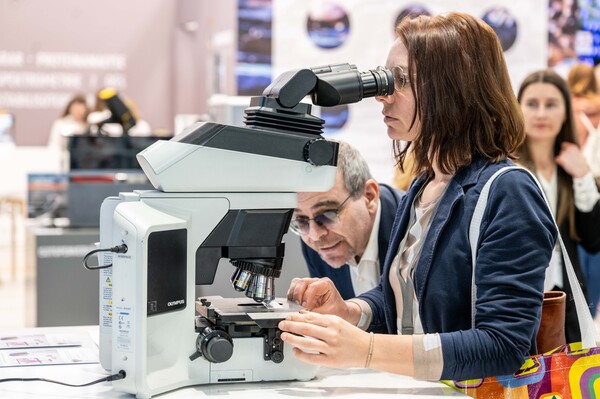
As the global laboratory equipment market shifts to AI- and automation-based integrated workflows, competition over standards is intensifying. Messe Muenchen said on March 13 that 17 South Korean companies will take part in the laboratory and analytical equipment exhibition Analytica 2026 in Munich, Germany.
Analytica 2026, to be held at Messe Muenchen in Germany from March 24 to 27, will draw 1,140 companies worldwide, up more than 8 percent in size from the previous event. The exhibition has set digitalisation, automation and sustainability as its three core keywords. As research sites globally move to AI- and automation-based integrated workflows, so-called platformisation, manufacturers are at a stage where they must prove the connectivity and scalability of their equipment.
South Korea will have 17 companies participating to showcase their technological capabilities. Six companies, including Liam Solution, Bioneer, Young In Chromass, Young In Ace and Eltech, will take part in the Korea Pavilion organised by the Korea Research Industry Association. Eleven companies - Curiosis, CubicK, EnGnomics, K-Lab, Human Corporation, BNF Korea, FirstLab, NanoEntek, Jeio Tech, Enbiotech and Shinko - will exhibit independently with individual booths.
Coxem, which participated in the previous exhibition, expanded its European distributor network with a tabletop scanning electron microscope (SEM), and Bioneer said it secured meetings with buyers from more than 50 countries with high-performance PCR equipment. Curiosis drew attention in the global life science market with its automated live-cell imaging technology. At the time, South Korea ranked eighth among participating countries at the exhibition, which drew 35,000 visitors from 117 countries.
A Messe Muenchen official said, "The reason global analytical equipment leaders converge here is that the technology and operational standards discussed here spread as standards for laboratories worldwide." The official added, "This participation by South Korean companies will be an important turning point that can allow them to go beyond simple product competition and leap forward as players designing the global laboratory ecosystem."
 Seok Dae-geon
d2dg@d-today.co.kr
Seok Dae-geon
d2dg@d-today.co.kr