
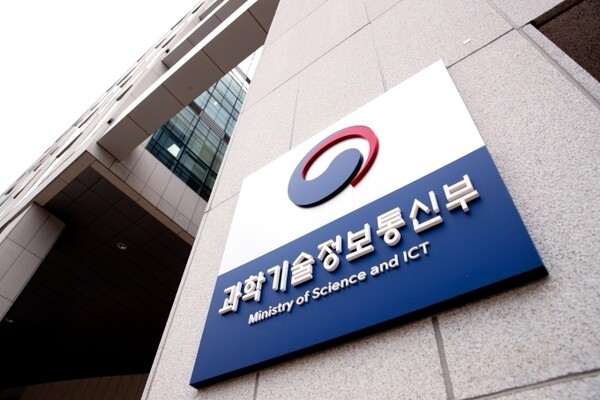
The Ministry of Science and ICT said on Tuesday it will accept proposals through March 12 for a “promising technology demonstration project using unlicensed spectrum” to verify new technologies and services based on unlicensed spectrum in real-world environments.
Technologies in unlicensed spectrum bands can be used by anyone without special permits as long as they meet technical standards, allowing applications across fields including smart factories, smart cities, smart homes, autonomous driving and disaster and safety management.
The ministry has supported companies using unlicensed spectrum to enter the market early and secure a competitive edge through annual demonstration projects since 2021. It has accelerated efforts to verify in real environments technologies made possible by expanded spectrum supply and eased regulations, aiming to drive digital innovation across the country.
Last year, it selected 4 companies for support. Among them, a “digital service for small and mid-sized shipyards using WiFi HaLow” enabled low-cost, low-power network operations within shipyards and monitoring of manufacturing equipment such as gas leak detection based on CCTV footage, promoting worker safety and creating on-site convenience.
It also delivered results through a demonstration of an “AIoT smart waste management service,” including improved accuracy in waste load measurement and optimisation of collection cycles. E-Cube Labs, which carried out the project, also posted follow-on results such as achieving 1.25 billion won in revenue from new contract sales.
This year, the ministry plans to select 3 new projects and provide a total of 906 million won in support. Projects are divided into 1 “technology verification” project and 2 “service-leading” projects depending on technical difficulty and links with local governments.
Technology verification projects target services that newly require technical verification due to recent unlicensed spectrum supply or that have high technological innovation and difficulty. Service-leading projects focus support on services that can spread early by linking with local governments’ strategic industries or public services.
Any domestic company, institution or organisation capable of demonstrating technologies and services using unlicensed spectrum can take part in the call. Applications can be submitted via e-Nara Help during the application period.
 Jin-ho Lee
jhlee26@d-today.co.kr
Jin-ho Lee
jhlee26@d-today.co.kr